
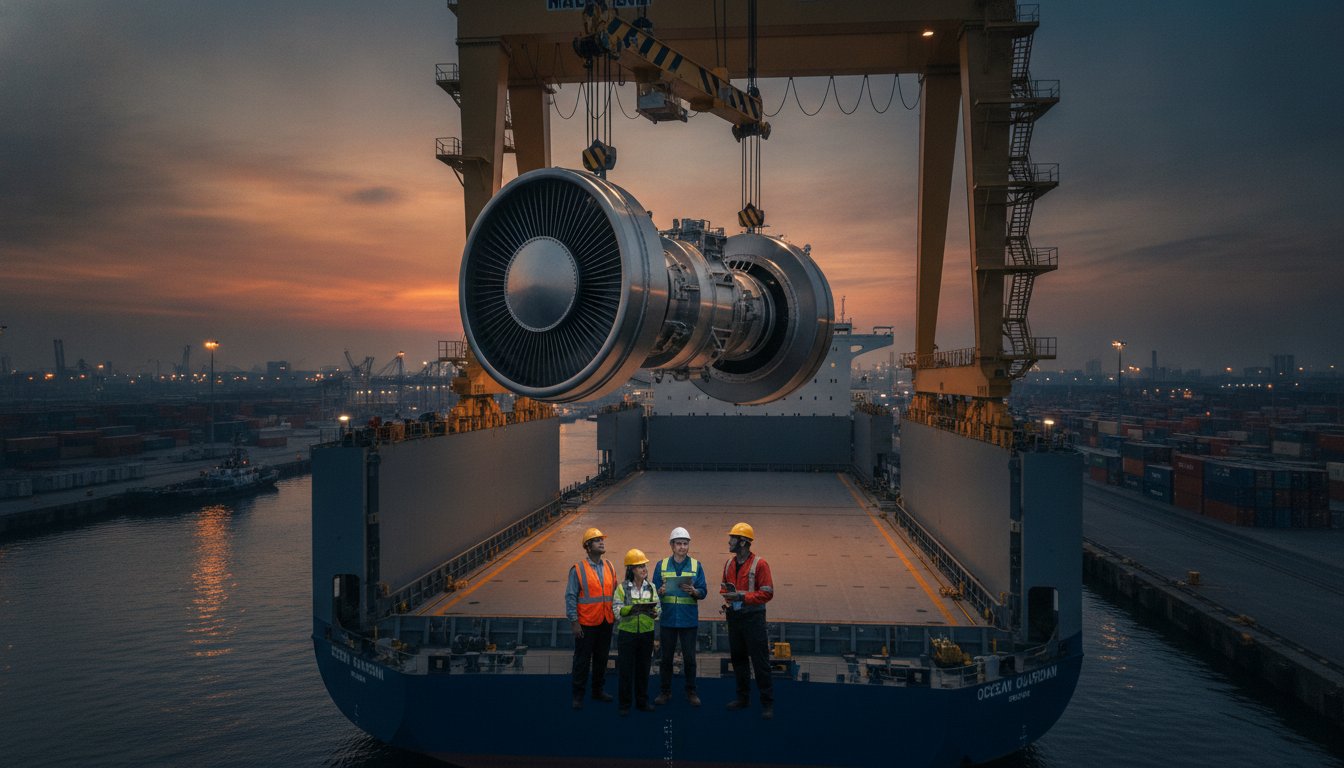
A single engineering oversight in your heavy-lift plan can trigger a catastrophic failure that halts an entire production line for months. When dealing with project cargo ocean freight, the margin for error is non-existent. You aren’t just moving equipment; you’re managing a complex ecosystem of technical rigging, shifting maritime regulations, and high-stakes timing. It’s a discipline of precision engineering where logistics and technical execution must be perfectly synchronized to protect mission-critical assets.
You understand that the stakes go far beyond the shipping rate. It’s about protecting multimillion-dollar assets and maintaining your operational integrity against a backdrop of volatile spot prices and tightening IMO safety standards. This article provides the framework to master the complexities of oversized and high-value logistics to ensure your assets arrive without incident. We’ll explore the critical regulatory landscape, including new SOLAS lifting appliance requirements and ITAR compliance, while providing a roadmap for technical oversight and route planning that eliminates the risk of production shutdowns. This is your path to absolute precision in a chaotic global market.
Key Takeaways
- Master the logistics architecture where 90% of success is secured through engineering and planning before the vessel arrives.
- Select specialized vessels and port handling procedures tailored to the exact dimensions and weight of your mission-critical assets.
- Mitigate catastrophic risk by integrating technical rigging oversight with advanced project cargo ocean freight strategies.
- Overcome regulatory hurdles by leveraging expert customs brokerage and ITAR compliance to prevent costly border delays.
- Ensure operational continuity through a flawless, end-to-end transport plan that treats logistics as a discipline of precision engineering.
Defining Project Cargo Ocean Freight: Beyond Standard Containers
Standard container shipping relies on the efficiency of uniformity. Project cargo is the absolute antithesis of that uniformity. It involves the domestic or international transportation of large, heavy, high-value, or complex pieces of equipment that cannot be boxed or palletized. This isn’t just about moving a container; it’s about moving the core assets of an industrial enterprise. When you’re managing project cargo ocean freight, you’re operating in a space where the equipment itself is the project. If the cargo doesn’t move, the mission stalls.
Standard freight moves on a schedule of convenience. Project cargo moves on a schedule of necessity. The primary differentiator is the requirement for customized engineering. Every lift, every lashing point, and every mile of the sea voyage must be pre-calculated with surgical precision. We define this framework as logistics architecture. It’s the structural blueprint that ensures a 200-ton turbine or a fragile automotive assembly line reaches its destination intact. Without this architecture, you aren’t shipping; you’re gambling with your company’s future.
What Qualifies as Project Cargo?
Project cargo is defined by its refusal to fit into standard parameters. Physically, it includes oversized (OOG) components, heavy-lift machinery, or ultra-sensitive technology that requires climate control and vibration monitoring. Operationally, it’s marked by tight delivery windows, multi-modal transitions, and high regulatory oversight. It’s the intersection of engineering and logistics for non-standard assets where the physical dimensions dictate the entire transport strategy.
The High-Stakes Nature of Industrial Projects
The impact of a single failure in this sector is devastating. A delay doesn’t just mean a late delivery; it often triggers a “line-down” emergency. Production stalls. Revenue evaporates. Reputations that took decades to build can vanish in a single afternoon because of a poorly planned route or a lashing failure. Standard freight forwarding lacks the technical oversight and specialized rigging knowledge required for these high-value assets. You need a partner who understands the intricate regulatory landscape, including complex customs brokerage Michigan requirements, to maintain momentum. Trust is the primary currency. When the margin for error is zero, technical expertise is the only safeguard against catastrophic loss.
Success in this field requires more than just a vessel and a crane. It demands an end-to-end vision that anticipates obstacles before they manifest. Whether it’s navigating a congested shipping lane or coordinating a heavy-lift crane at a remote port, every detail counts. This is why the logistics architecture must be established months before the first piece of equipment leaves the factory floor. Precision is the only way forward.
The Modes of Transport: Engineering the Sea Voyage
Vessel selection for project cargo ocean freight is a decision of physics, not just logistics. It’s a technical match between the physical properties of your asset and the structural capabilities of the ship. When you’re moving a 150-ton industrial turbine or a sensitive automotive assembly line, the vessel’s deck strength and stability become your primary safeguards. You don’t just book space; you engineer a transport solution that accounts for center of gravity, acceleration forces at sea, and the specific limitations of your origin and destination ports.
The loading phase represents the highest period of risk. This is where specialized stevedoring and “white-glove” oversight are mandatory. Every lashing point and securing protocol must be verified by expert surveyors to ensure the cargo remains immobile during high-sea transit. A single failed weld or a loose chain can lead to catastrophic damage. For these mission-critical moves, proactive ocean freight shipping USA to Europe management is the only way to maintain control over the outcome.
Break Bulk vs. RoRo vs. Out-of-Gauge (OOG)
- Break Bulk: This is the gold standard for massive, non-containerized assets. Turbines, industrial presses, and oversized boilers are loaded individually into the hold or onto the deck of a multi-purpose vessel.
- RoRo (Roll-on/Roll-off): The preferred method for self-propelled or towable heavy machinery. It minimizes lifting risks by allowing the cargo to be driven directly onto the ship via a ramp, which is ideal for construction equipment and large vehicles.
- OOG (Out-of-Gauge): This utilizes specialized equipment like flat racks or open-top containers within the standard container network. It’s an efficient solution for cargo that exceeds standard dimensions but still fits within the footprint of a container ship.
Heavy Lift and Specialized Vessel Requirements
When the destination port lacks the infrastructure to handle your cargo, you need a geared vessel. These ships are equipped with their own heavy-lift cranes, often capable of tandem lifts to move hundreds of tons. Under new IMO regulations effective January 1, 2026, all onboard lifting appliances must meet mandatory design and testing standards. This makes the choice of a modern, compliant fleet more critical than ever.
Deck strength is equally vital. Concentrated heavy loads can compromise a vessel’s hull if not properly distributed through dunnage and specialized rigging. Expert surveyors must be on-site to provide loading supervision, ensuring that the theoretical plan matches the reality of the move. Success isn’t measured by the departure, but by the arrival of an undamaged asset ready for immediate installation.
Navigating the Complexities: Risk Management and Compliance
The regulatory landscape is the invisible barrier that can sink a project faster than a physical accident at sea. In project cargo ocean freight, compliance isn’t a box to check; it’s a strategic defense mechanism. A single administrative error can trigger a cascade of inspections, fines, and indefinite delays. You can’t afford to treat border crossings as an afterthought when your assets are mission-critical. When your equipment is the project, the move is the priority. Failure to plan for these “invisible” hurdles is a plan for failure.
Expert customs brokerage Michigan is the primary solution for ensuring smooth entries across international borders. These moves often involve dual-use goods or high-value industrial machinery that attracts intense scrutiny from customs authorities. Without precise documentation, you risk catastrophic production line shutdowns. It’s about more than just moving freight. It’s about navigating a technical landscape where trust is the primary emotional currency and precision is the only standard.
ITAR and Regulatory Trade Compliance
For defense contractors and automotive manufacturers, the stakes are even higher. Managing the chain of custody for restricted industrial technology requires ITAR compliant logistics Michigan. Failure to adhere to these strict protocols doesn’t just lead to fines; it can result in the loss of export privileges. This isn’t just logistics. It’s a matter of national security and corporate integrity that demands a steady, expert hand.
The foundation of this compliance is the shipper’s letter of instructions (SLI). This document serves as the technical blueprint for your export. It must be flawless. It dictates how the cargo is handled, reported, and cleared. Precision here is non-negotiable. Every detail must be verified before the first piece of equipment leaves the factory floor to ensure a seamless transition between jurisdictions.
Mitigating Financial and Operational Risk
Operational risk extends beyond the physical voyage. Port congestion or sudden weather shifts can disrupt the most meticulous schedules. You need a contingency plan that accounts for these variables before they occur. Hidden costs like storage, demurrage, and detention can quickly erode a project’s budget if not managed proactively. These are the preventable costs of poor planning and reactive management.
High-value industrial assets require specialized insurance that goes beyond standard maritime coverage. General cargo policies often contain exclusions for the very risks project cargo faces, such as specialized rigging failures or specific environmental exposures. You need a partner who understands the technical nuances of these moves; this level of expertise is often provided by elite property and casualty insurance producers trained through IICS, ensuring your coverage is as precise as your engineering. Proactive communication is the only way to navigate high-stakes logistics with confidence. Failure is not an option when the assets are this valuable.
The Logistics Architecture: Planning for Flawless Execution
In the high-stakes environment of project cargo ocean freight, 90% of a successful move is decided before the vessel even docks. Logistics is no longer a commodity service; it’s a discipline of precision engineering. A flawless execution requires a deep, collaborative architecture between the shipper, the logistics provider, and the engineers on the ground. You can’t rely on a “port-to-port” mentality when your reputation and millions of dollars in assets are on the line. Success demands a “site-to-site” philosophy that oversees every inch of the journey.
This architecture includes the meticulous acquisition of permits and the coordination of police or utility escorts for land-side segments. Moving oversized industrial presses or massive turbines often requires temporarily lifting power lines or reinforcing bridge structures. These aren’t just administrative tasks. They’re mission-critical operations that ensure the physical path is clear of obstacles. If you’re ready to secure your supply chain, it’s time to engage with experts in project logistics who understand the gravity of these moves.
While many industrial moves focus on the Midwest, site safety and regulatory diligence are equally critical in other regions; for a comprehensive look at South Carolina’s 2026 abatement standards, click here.
Route Surveys and Infrastructure Analysis
A physical route survey is a non-negotiable insurance policy against mid-transit failure. You must verify bridge heights, road weights, and turning radii with absolute certainty. It’s not enough to rely on digital maps or outdated municipal records. Our team conducts on-the-ground assessments to ensure every mile is traversable. This analysis extends to the port infrastructure as well. We confirm that the destination port has the crane capacity and staging area required to handle your specific cargo dimensions and weight without incident.
Rigging, Crating, and Site-to-Site Coordination
The move begins long before the cargo reaches the trailer. Specialized rigging is essential for extracting heavy equipment from the factory floor safely. Once prepared, industrial packaging and crating services for freight protect your assets against the corrosive maritime environment and the physical stresses of ocean transit. This technical oversight continues through the “last mile” delivery. We coordinate with your installation team to ensure the equipment arrives exactly when the site is prepared for integration. Precision timing prevents costly site delays and ensures your mission stays on track.
Mission-Critical Execution: The ICAT Detroit Advantage
ICAT Detroit stands as the elite partner for the most demanding industrial moves. We don’t just facilitate transport; we take full ownership of the outcome. By combining our deep Detroit-based expertise with the expansive global network of ICAT Logistics, we bridge the gap between local manufacturing requirements and complex international shipping lanes. Our commitment to a zero-failure mentality is the foundation of our mission-critical logistics. We understand that in the world of project cargo ocean freight, the cost of an incident is measured in lost production days and compromised reputations.
Trust is the primary emotional currency in high-stakes logistics. Before committing your next move to a provider, utilize the mission-critical ocean freight forwarder checklist to evaluate your current strategy. It serves as a technical benchmark for the precision required in this sector. You need a partner who views logistics as a discipline of engineering, not just a series of transactions.
Technical Oversight for High-Value Industrial Moves
We provide on-site supervision for every critical loading and unloading phase. Our single point of contact model eliminates the chaos of multi-modal projects, ensuring that communication remains clear when the pressure is highest. This authoritative oversight was vital during a recent operation moving critical automotive machinery from Europe to Michigan under intense deadlines. We didn’t just track the shipment; we managed the rigging, cleared customs ahead of arrival, and staged the final delivery to match the assembly team’s exact schedule. Failure was not considered a possibility.
Seamless Integration of Global and Local Logistics
Our team leverages a robust expedited freight shipping Detroit infrastructure to provide immediate support for project cargo ocean freight. Whether it’s staging components at our Taylor, Michigan facility or coordinating specialized rigging for a heavy-lift move, we understand the specific pressures facing Michigan manufacturers. For industrial shippers with transatlantic requirements, our expertise in ocean freight shipping USA to Europe ensures that regulatory complexities like ICS2 Phase 3 compliance and the EU Carbon Border Adjustment Mechanism never become obstacles to your mission. We serve as a protective and deeply knowledgeable partner who takes full responsibility for your most valuable assets. This localized expertise, backed by a global network, ensures that your project maintains momentum regardless of market volatility or geopolitical shifts.
Precision is the only way forward when the margin for error is non-existent. We invite you to move beyond standard freight forwarding and experience the certainty of a mission-driven logistics partner. Start your project planning today with a technical consultation to secure your industrial future. Contact our team to begin the logistics architecture for your next mission-critical move.
Secure Your Industrial Future with Flawless Execution
Success in the industrial sector is built on the reliability of your most complex assets. Moving these non-standard components requires more than a shipping lane; it demands a comprehensive logistics architecture that anticipates every technical and regulatory hurdle. By prioritizing rigorous route surveys and precision rigging, you eliminate the variables that lead to catastrophic delays. Mastering project cargo ocean freight is the difference between a stalled production line and a seamless installation.
ICAT Detroit serves as the steady hand for your most demanding moves. As ITAR and trade compliance experts, we manage the intricate regulatory landscape to maintain your operational integrity. Our team provides specialized industrial rigging and on-site oversight to ensure your high-value assets are protected at every transition point. We deliver mission-critical logistics for automotive and defense leaders who refuse to consider failure as an option. Secure your mission-critical project with ICAT Detroit today. You’ve engineered your assets for excellence; ensure their journey matches that standard.
Frequently Asked Questions
What is the difference between project cargo and standard ocean freight?
Standard ocean freight relies on the efficiency of uniformity and standard container dimensions. In contrast, project cargo ocean freight involves the transportation of assets that are too large, heavy, or complex for standard containers. This requires specialized rigging, customized vessel selection, and a unique logistics architecture for every move. Precision is the primary requirement for these mission-critical industrial assets.
How far in advance should I start planning a project cargo shipment?
You should begin planning a project cargo move at least three to six months before the required delivery date. Complex industrial moves require extensive lead times for route surveys, permit acquisitions, and vessel chartering. Waiting until the last minute increases the risk of vessel unavailability or regulatory delays that can halt your entire production line. Early engagement is essential for success.
Does project cargo always require specialized insurance?
Yes, project cargo almost always requires specialized marine insurance beyond standard all-risk policies. Standard coverage often contains exclusions for specialized rigging failures or specific environmental exposures unique to oversized assets. You need a policy that reflects the true replacement value and the technical risks associated with heavy-lift operations to ensure financial protection. Trusting a basic policy is a high-stakes gamble.
What are the most common challenges in heavy-lift ocean transport?
The most common challenges include insufficient port infrastructure, volatile weather conditions, and the technical stability of the vessel. Many ports lack the crane capacity or staging areas required for heavy-lift assets. Additionally, shifting acceleration forces at sea can compromise the lashing and securing of project cargo ocean freight if the engineering calculations aren’t performed with absolute precision. Technical oversight is the only solution.
How does ITAR compliance affect my project cargo ocean shipment?
ITAR compliance mandates a strict chain of custody and rigorous documentation for any defense-related technology. It requires working with an ITAR-compliant provider who understands the specific reporting requirements for restricted goods. Failure to maintain compliance can lead to severe federal penalties and the immediate loss of export privileges. This makes technical oversight a non-negotiable requirement for mission-critical defense moves.
Can project cargo be moved via RoRo vessels?
Yes, Roll-on/Roll-off (RoRo) vessels are the preferred method for self-propelled or towable heavy machinery. This method minimizes risk by allowing equipment to be driven directly onto the ship via a ramp, eliminating the need for complex crane lifts. It’s an ideal solution for construction equipment and large automotive vehicles that fit within the vessel’s height and weight clearances. It provides a safer alternative to traditional lifting.
What is a route survey, and why is it necessary for oversized freight?
A route survey is a physical, on-the-ground assessment of the transport path from origin to destination. It’s necessary for oversized freight to verify bridge heights, road weight limits, and turning radii with absolute certainty. This survey acts as a critical insurance policy. It ensures that your mission-critical assets don’t encounter physical barriers that could cause catastrophic delays, equipment damage, or safety incidents during transit.
How do I choose the right ocean freight forwarder for complex industrial cargo?
You should choose a forwarder based on their technical rigging expertise and their experience in your specific industrial sector, such as automotive or defense. A reliable partner must offer a single point of contact model and demonstrate a deep understanding of the regulatory landscape. Prioritize providers who take full ownership of the outcome and provide on-site supervision for the most critical phases of the move.