
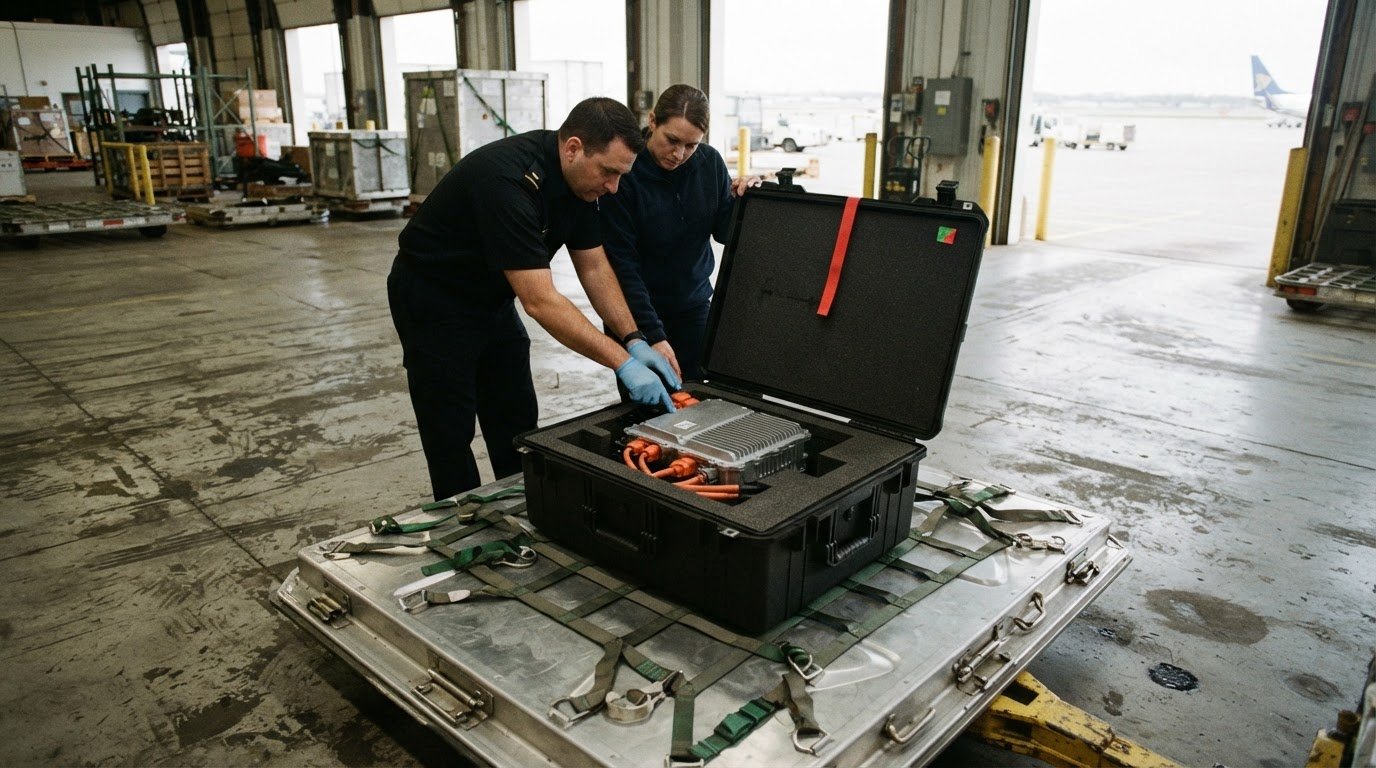
The clearance clock starts before cargo reaches a U.S. port. For expedited customs clearance in the USA, prepare accurate entry documents early and meet filing deadlines: according to U.S. Customs and Border Protection, the Importer Security Filing for ocean imports is due at least 24 hours before the vessel departs the origin port. When air cargo is already in transit, required security data and clear communication can help keep the shipment moving through the next steps.
Using the same customs broker and freight forwarder can simplify coordination, but clear handoffs and timely information matter most. This guide explains which documents to prepare, how key CBP deadlines apply, how broker and forwarder arrangements affect the process, and what to do when a shipment is delayed. It also covers steps you can take while cargo is in the air, so you can act quickly while staying compliant.
Key Takeaways
- Align the commercial invoice, packing list, and shipment details so your broker has consistent information to prepare the entry.
- For ocean imports, file the Importer Security Filing at least 24 hours before the vessel departs the origin port, according to U.S. Customs and Border Protection.
- Set clear handoffs between your customs broker and freight forwarder to keep documentation, filing, and shipment updates coordinated.
- When a shipment is delayed, identify whether the issue involves documentation, classification, inspection, or another agency’s review before deciding the next action.
- Air cargo can still move toward clearance in transit when required information is submitted on time and potential issues are communicated promptly.
Checking commercial invoices, packing lists, and shipping documents
Build the customs file around the exact goods, value, origin, and destination. A mismatch between the invoice and packing list can leave the freight entry incomplete.
-
Gather required clearance documents
Collect the commercial invoice, packing list, bill of lading or air waybill, and any applicable certificate of origin. The invoice describes the transaction and value, while the packing list identifies the shipment’s contents. A certificate of origin helps determine tariffs. For ocean cargo, send the arrival notice, invoice, and packing list to your import customs broker.
-
Check shipping documents and reporting
Compare the shipper, importer, destination, goods description, quantities, and shipment references across all documents. For example, if the invoice describes machine components but the packing list says finished assemblies, resolve the difference before filing. Customs declarations are required for import and export procedures, so make sure the reported details match the supporting freight documents.
- Confirm the release filing is prepared. Customs Form 3461 is the U.S. customs entry document described for cargo release. Match its entry details to the invoice and transport document, including the merchandise description and declared value. A consistent file gives the broker a clear basis for submitting the entry and responding to questions about the shipment.
- Identify agency requirements before the shipment moves. Check whether the goods need permits or additional documentation from the FDA, USDA, or EPA. Products subject to an agency’s review may require records beyond the commercial invoice and packing list. Determine the applicable requirements based on the commodity and its use, then include the relevant records in the customs file.
- Check packaging and labels against the declared goods. Product descriptions and origin information should match the documents, and the packing list should account for every item and package. Accurate, complete records can help prevent delays caused by missing or incorrect information. Keep the final document set together so the freight forwarder and broker are working from the same shipment details.
Are there advantages to using the same customs broker and freight forwarder?
One coordinated team can reduce handoff gaps, but the broker and forwarder still have distinct roles. Agree on who prepares and files the entry and who tracks the carrier’s release.
-
Choose a clearance service provider
Map each party’s role before the shipment moves. A customs broker prepares and files the entry; a freight forwarder coordinates transportation and shipment details. Express couriers may combine transport and clearance for their shipments, while a forwarder coordinates broader freight movements. Faster clearance depends on accurate data and timely filings, not simply on using one company for every task.
At a U.S. port of entry, the cargo, carrier, terminal, and any agency review shape the operational handoffs. Set a clear process for filing, status updates, and resolving document gaps at the destination. Local cargo handling and examination procedures can vary, while customs requirements depend on the shipment.
-
Confirm broker support and credentials
Set the broker’s responsibilities in writing: prepare the customs entry, classify merchandise, calculate its value, file with customs authorities, and communicate about questions. After submission, the broker receives the entry document returned by Customs when cargo is cleared. Confirm who sends the supporting records and who alerts the carrier or forwarder when the release status changes.
For repeat shipments, pre-clearance work can help prevent avoidable pauses. A broker may pre-key information from a parts database before freight reaches a U.S. port. This can be useful when recurring automotive components have consistent product records. Keep the data current, and assign one party to resolve differences between the database and shipment paperwork before filing.
Use a customs broker with the appropriate credentials and authority for the entry. Define the scope of clearance services, including classification, filing, agency communication, and follow-up. A freight forwarder can coordinate transport and relay shipment information, but that coordination does not replace the broker’s role in preparing the entry.
-
Review fees and bonds
Request an itemized breakdown before authorizing the entry. Separate the broker’s service charge from filing-related charges and any customs bond costs. Confirm which party arranges the bond, what shipment or entry it covers, and whether the quoted work includes corrections or follow-up. Clear terms help prevent confusion when the carrier is awaiting release.
Match the bond arrangement to the shipment plan and expected entry activity. A single-entry bond applies to an individual shipment, while a continuous bond covers recurring import activity. Confirm the arrangement with the broker handling the entry. For unusual cargo or agency requirements, clarify the expected documentation and who will respond to a hold.
When several parties handle the freight, a defined handoff protects timing and accountability. For coordinated shipment and customs support, contact ICAT Logistics Detroit.
CBP customs clearance steps and filing deadlines
Build the filing schedule around vessel departure, arrival, release, and delivery. U.S. Customs and Border Protection deadlines occur at different stages of the import process.
- File ocean security data before the cargo loads. For ocean imports to the United States, the Importer Security Filing (ISF 10+2) must be filed at least 24 hours before the vessel departs the origin port, according to U.S. Customs and Border Protection. Ocean AMS data for cargo entering the United States is due 24 hours before loading at the foreign port, according to U.S. Customs and Border Protection. Coordinate both submissions with the carrier and filing partner.
- Send the broker complete entry information before arrival. Importers can submit customs documents before ocean cargo reaches its U.S. port of entry, allowing pre-arrival processing. Align the invoice, packing list, transport details, and importer information so the broker can prepare the entry. For ocean freight, confirm filing status with the partner responsible for each submission.
- Track arrival and the entry filing deadline. A U.S. customs entry must be filed within 15 calendar days of arrival, according to U.S. Customs and Border Protection. Record the arrival date and assign responsibility for filing, rather than relying on an informal handoff. The entry supports customs review of the import, including the goods and their declared value.
- Arrange the customs bond as part of entry planning. A bond supports the import process by addressing applicable obligations tied to the entry. Coordinate its arrangement with the customs broker before cargo arrives, and keep the bond details linked to the shipment record. This can help prevent a documentation gap from disrupting release or onward delivery.
- Complete the entry summary after release. The U.S. entry summary, CBP Form 7501, is due within 10 working days after release, according to U.S. Customs and Border Protection. Set a post-release task to submit the form and reconcile it with the entry information. Keep agency correspondence and filing records together, including any details relevant to duties or a later review.
Common causes of U.S. customs delays
Identify the cause of a hold before changing the delivery plan. Documentation gaps, classification errors, inspections, and agency reviews each require a different response.
- Compare the declared goods with their U.S. Harmonized Tariff Schedule classification. An incorrect HTS classification can lead to improper duty assessments, added scrutiny, and delays. For example, a parts description that does not match its classification can complicate tariff review. Ask the customs broker to assess the product details and correct the entry when needed.
- Check whether CBP selected the shipment for examination. Customs authorities may inspect freight physically, by X-ray, or through laboratory testing. Each process can interrupt the supply chain while officials review the cargo. Ask the broker or forwarder for the reason for the hold and any requested response, then provide relevant shipment or product records promptly.
- Check the Importer Security Filing if the shipment is ocean cargo. If an ISF issue is addressed after arrival or after CBP flags the shipment, the delay can range from a few days to a couple of weeks. Identify the missing or incorrect information, coordinate a correction with the filing partner, and keep the carrier updated on the status.
- Determine whether another U.S. agency requires advance shipment information. Depending on the commodity, FDA, USDA, DEA, EPA, CPSC, or TTB may require data before cargo arrives. For example, food or beverages subject to FDA prior notice can face refusal of admission if notification is missing. The goods may require re-export at the shipper’s expense or destruction, and repeated or egregious violations may result in fines.
- Review origin and product details if tariff treatment is questioned. A certificate of origin helps determine tariffs, while inconsistent origin information across an import or export file can prompt follow-up. Match the origin in supporting records to the goods and invoice, then have the broker address discrepancies using the relevant documentation. Do not change shipment details without evidence, as unsupported corrections can raise further questions.
Expedited customs clearance while cargo is in the air
CBP can process low-risk shipments faster through trusted-trader programs; CTPAT-certified importers, carriers, and service providers are considered lower risk and experience fewer exams and faster clearance. U.S. customs clearance typically takes 1 to 5 business days, while shipment readiness and government review affect the timeline.
-
Check shipment eligibility for expedited clearance
Identify whether your importer, carrier, or service provider holds CTPAT certification. Customs-Trade Partnership Against Terrorism (C-TPAT) is a pre-clearance program for faster processing of low-risk shipments. Certified participants are considered lower risk by U.S. customs officials and experience fewer exams and faster clearance.
Certification does not remove the need for accurate cargo data or government review. Confirm the shipment’s classification, declared details, and agency requirements before departure. CBP may still select cargo for inspection, so prepare supporting records that explain the goods and their intended use. A complete file gives the customs clearance process a clear starting point.
-
Arrange clearance while cargo is in the air
Submit available shipping data electronically while the aircraft is en route. Electronic Data Interchange can transmit documents quickly and accurately, helping the broker work from current shipment information. Send classification details, invoice data, and transport references together, and answer clarifying questions promptly before arrival.
Meet the Air Cargo Advance Screening (ACAS) timing rule. For long-haul air cargo entering the United States, submit ACAS data at least 4 hours before arrival at the first U.S. port. For short-haul flights under 4 hours, submit the data no later than wheels-up at the foreign origin. These milestones make departure time and flight duration operationally critical.
Maintain a live handoff between the broker, freight forwarder, and shipment contact. Share missing information, CBP requests, and potential delays as soon as they arise. If an inspection is required, organize the relevant product and entry records for the response. Accurate classification and timely submission help avoid preventable pauses, but government review remains part of the process.
-
Estimate the clearance timeframe
Use 1 to 5 business days as the typical U.S. customs clearance timeframe, not as a guaranteed release schedule. A prepared shipment may clear in less than a day, while an inspection hold can extend the process to a week or two in extreme cases.
Track the flight’s arrival, filing status, agency requests, and CBP release updates as separate milestones. If a document question surfaces in the air, send the correction promptly and confirm the broker has received it. To coordinate time-sensitive freight and customs documentation, contact ICAT Logistics Detroit.
ICAT Detroit: Expedite Ground Shipping
ICAT Detroit coordinates time-sensitive freight moves with transport, customs documentation, and compliance requirements in view. With over 35 years in the cargo shipping business, the team can help you coordinate shipment details when an arrival deadline is tight or a customs question could disrupt the next leg.
Expedite Ground Shipping can support urgent freight movement when ground transport fits the shipment’s route and timing. ICAT Detroit coordinates shipment details and handoffs to keep the transport plan aligned. Ground expediting does not replace customs review or guarantee release; CBP and other government agencies retain control of their processes.
Documentation matters as much as movement. ICAT Detroit coordinates customs, trade compliance, security, and documentation for cross-border shipments. This support connects shipment records with the transport plan, helping the parties handling freight work from consistent information. If CBP requests details or an agency review affects timing, clear communication helps identify the issue and organize the next response.
Some freight needs more than an urgent point-to-point move. Oversize Freight Handling supports cargo that requires specialized planning, while Project Logistics coordinates complex shipments with multiple transport and timing requirements. These services suit moves such as industrial equipment or production-critical freight, where dimensions, route needs, and delivery sequence shape the plan.
Before the move, ICAT Detroit coordinates relevant shipment details, documentation, and transport requirements. Share the cargo description, origin and destination, current location, transport mode, and required delivery timing. Include any known customs hold, agency request, or classification concern. These details help shape the logistics plan and clarify which movements and compliance steps need coordination.
For time-sensitive cargo, coordinated ground movement can form one part of a wider freight plan. Customs review remains a government process, and an inspection or information request can affect release timing. ICAT Detroit coordinates its permitted freight and documentation services around the shipment’s needs, without promising a particular customs outcome.
Contact ICAT Detroit to discuss your shipment and the coordination it requires.
Put the next shipment decision in motion
For expedited customs clearance in the USA, turn shipment facts into a coordinated plan. Identify the cargo’s current position, destination, required delivery timing, and any unresolved customs or agency issue. Then assign clear owners to the transport plan and compliance work. This gives each partner a practical basis for action as the shipment moves.
ICAT Detroit coordinates Expedite Ground Shipping when an urgent shipment needs ground movement. For freight with unusual dimensions or multiple linked movements, Oversized freight handling and Project Logistics address transport-planning demands. The right approach depends on the route, cargo requirements, and coordination needs.
Bring the shipment details together before the next handoff. A clear view of the cargo, route, timing, and open issues keeps the conversation focused on the decisions that matter. Take the next step with ICAT Detroit to coordinate freight and compliance requirements.
Contact ICAT Detroit about your shipment, and move forward with a clear plan.
Frequently Asked Questions
How Are Taxes and Duty Rates Determined?
Applicable trade measures can change the duty treatment for particular goods. Section 301 tariffs apply to China-related imports, while Section 232 tariffs apply to steel, aluminum, automobiles, and auto parts imported into the United States. Some imports may also face countervailing or anti-dumping duties that require case-specific review. Ask your broker to identify which measures apply to the goods before finalizing import cost estimates.
What Documentation Do I Need To Give My Broker?
Give your broker enough transaction context to resolve questions beyond the standard shipment file. Include product identifiers, the purchase order reference, seller and buyer details, and a contact who can explain unusual goods or transaction terms. For recurring shipments, note what has changed since the previous entry, such as a revised part number or supplier. This context helps the broker focus follow-up requests instead of reopening settled details.
What is expedited customs clearance in the USA?
Expedited customs clearance in the USA means coordinating customs preparation and handling to reduce avoidable waiting during release. It does not exempt a shipment from CBP review or guarantee a particular release time. For cargo already in transit, the practical difference is whether the responsible parties can submit and clarify information before arrival rather than waiting until it reaches port.
What are the steps for expedited customs clearance in the USA?
Plan the customs handoff and the cargo’s post-release movement as connected but separate tasks:
- Assign one point of contact to manage outstanding customs questions.
- Track release status separately from terminal availability and pickup arrangements.
- Confirm the forwarder has the delivery instructions needed once cargo is available.
This distinction matters because customs release and physical delivery are separate operational milestones.
What documents are required for fast U.S. customs clearance?
Requirements depend on the goods and the agencies that regulate them. Beyond the core shipment file, a product may need a permit, technical description, or agency-specific record. Organize supporting files by shipment and make the current version easy to identify. If a revised product specification replaces an older one, for example, label the current file clearly so the broker does not rely on outdated details.
How much do expedited customs brokerage services cost in the USA?
The price depends on the shipment and is provided after a quote request. Factors can include the entry’s complexity, filing requirements, bond arrangement, and agency-related work. When reviewing a quote, separate customs brokerage charges from transportation charges and government-assessed duties or fees. An itemized breakdown helps show which services apply to the shipment and which charges relate to other parts of the logistics plan.
What are the U.S. customs rules and duties for expedited shipments?
Expedited transport does not remove customs obligations, and importers still need to retain entry records after release. U.S. importers are expected to maintain entry records for five years. Keep final entry documents and related correspondence organized so your team can retrieve them if CBP requests records later. Assign record ownership internally, especially when a broker or logistics partner holds copies during clearance.
How can importers prevent delays in U.S. customs clearance?
Inspect goods at their point of origin before shipment to identify quality, packaging, labeling, or safety concerns. A damaged package or unclear product label, for example, can raise questions after cargo reaches the United States. Resolve visible issues with the supplier before dispatch and record any corrective action. This origin review complements customs preparation by addressing shipment problems before they move through the supply chain.