
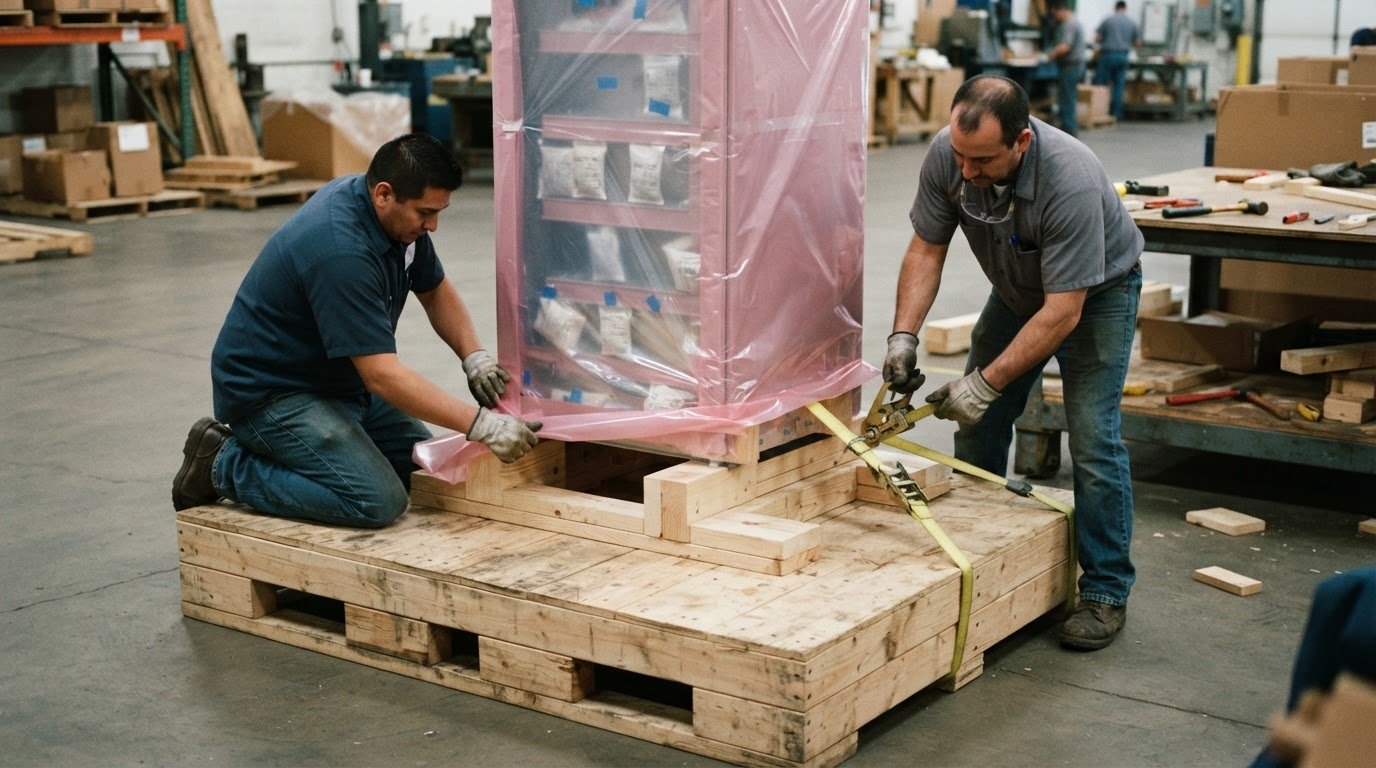
Can you make your own ISPM-15 mark? No. It’s an official mark tied to compliant treatment, and solid wood packaging for export must be heat-treated and officially marked. Effective export crating solutions start with that requirement, then account for the cargo and its destination.
Getting the crate right takes more than enclosing a shipment. Its design must suit the item’s dimensions, weight, value, and fragility. Protective packaging and moisture barriers can help address transit risks, while the shipping mode and handling requirements shape the overall plan.
This guide explains what ISPM-15 means for US shippers, how professionals plan crate design and protection for fragile or static-sensitive goods, and how moisture control can help limit cargo damage. It also covers the information a crating provider needs to plan the work, factors that affect timing and cost, and how crating connects with export shipping coordination.
Key Takeaways
- Understand how cargo dimensions, weight, fragility, value, and destination shape crate design.
- See why ISPM-15 treatment and official marking matter for solid wood packaging in export shipments.
- Learn how protective packaging can address the handling needs of fragile and static-sensitive goods.
- Explore how moisture barriers and corrosion-prevention measures can help protect cargo in transit.
- Find out what to consider when coordinating crating and shipping for oversized machinery or delicate equipment.
Crate design based on item dimensions, weight, value, fragility, and destination
Export crates and shipping containers serve different purposes and use different materials. Crates commonly use solid wood or plywood, while freight containers are commonly made of steel. Cargo dimensions, weight, fragility, value, and destination all influence the crate’s structure and protective packaging.
Design Criteria for Export Crates
Design starts with accurate measurements of the item’s length, width, height, and weight. A long machine component, for example, needs support beneath its full footprint and restraint to prevent shifting. Fragile edges or projecting parts may need separate blocking. The destination and route also affect access points, handling orientation, and how the crate is secured during loading.
Value and fragility determine the level of protection. A high-value instrument may need a fitted interior, firm restraint, and clear handling marks, while a durable component may need simpler protection. Custom crating should fit the cargo and prevent movement, rather than leave excess space. Accurate item details help ensure the design addresses the actual load.
Custom Boxes, Crates, and Packing Kits
Custom wooden boxes enclose individual items, while open or partially enclosed crates can suit cargo that needs visible access or a particular loading approach. Packing kits can combine an outer box or crate with fitted cushioning and blocking. For example, a delicate instrument can be secured in an inner package, then fixed inside the export crate.
Customization also accounts for destination and handling. A crate may need orientation marks, forklift access, or a design suited to the planned shipping mode. Shrink film can secure protective layers around an item, while desiccant can be added when the packaging plan calls for moisture control. Every choice should address a specific cargo risk.
Crate Materials and Construction Standards
Solid wood provides structural framing for many export crates; plywood can form panels or box walls, while steel freight containers provide the outer transport enclosure. Crate styles include enclosed boxes and framed crates. Choose based on cargo shape, support needs, and handling. Construction should restrain the load and protect exposed surfaces without obstructing planned lifting or loading.
ISPM-15 requires solid wood packaging material to be heat treated and officially marked. The treatment requires a minimum temperature of 56 °C throughout the wood profile, including its core, for 30 continuous minutes. Once treated and officially marked, the treatment does not expire. Repaired or recycled wood packaging may require additional treatment and marking.
Wood packaging compliance is only one part of the shipping plan. Crate dimensions and handling needs should align with the transport leg, including ground movements. For shipments requiring coordinated ground transportation planning, the crate’s size, weight, and loading method inform the movement plan. That alignment helps avoid designing a package that cannot be handled as intended.
Packaging options for fragile and static-sensitive goods
Fragile and static-sensitive cargo needs protection tailored to its specific risks. The packaging plan should account for the shipping mode, handling, and any hazardous-goods requirements.
Packaging by Shipping Mode
Air, ocean, and truck transport involve different handling sequences. Air shipments may pass through several transfers, so packaging should secure components and limit movement inside the outer case. Ocean shipments may need sealed protective layers to account for moisture exposure during transit. Truck shipments require restraint suited to loading, unloading, and movement on the road.
The shipping plan also determines how the package is accessed and secured. A compact crate may suit air transport, while a larger ocean shipment may need blocking to prevent heavy cargo from shifting. For truck transport, supports can help keep the load stable during handling. Design the crate for the full route, not just its first leg.
International transit brings documentation and cargo-description requirements. Engine-powered items that use flammable liquid or gas are regulated for air transport under IATA and ocean transport under the IMDG code in almost every configuration and situation. The commodity and its condition therefore matter before the shipping mode is finalized. Packaging instructions and shipping documents should describe the cargo being tendered.
For hazardous goods, plan packaging and documentation together. The shipper’s description, transport mode, and cargo configuration inform handling and paperwork. A professional packaging plan can identify how these requirements affect the crate, protective materials, or transport sequence. Do not assume a standard fragile-goods package suits regulated cargo without that review.
Fragile, Static-Sensitive, and Heavy Goods
Fragile goods need cushioning that supports the item without concentrating pressure on delicate edges. A glass-faced instrument, for example, can be separated from the crate wall with fitted padding and held in place with blocking. Inner supports should prevent movement while keeping pressure away from screens, connectors, and protruding controls.
Static-sensitive electronics need packaging suited to the equipment’s sensitivity. Protective layers should contain the components and prevent contact or movement during transport. The sequence matters: protect the sensitive component first, then secure its inner package within the outer case. Clear identification helps handlers recognize special handling needs.
Heavy equipment presents a different challenge. Its weight must transfer through the crate base and supports, not through fragile parts or exposed housings. A control unit attached to a heavy machine, for instance, may need separate cushioning while the machine is blocked against movement. This helps prevent the cargo’s weight from damaging its most sensitive components.
Export packaging also has to suit the destination and receiving process. A crate that protects equipment in transit should still allow controlled unloading and access at arrival. Share the cargo description, dimensions, weight, sensitivity, and planned transport mode so the packaging design addresses the full shipment. For help coordinating cargo protection with movement requirements, discuss your packaging requirements.
Cargo preservation, moisture barriers, and corrosion prevention
Export crating helps reduce damage by restraining cargo, cushioning impact, and separating vulnerable surfaces from crate walls. Sealed barriers and controlled access can help limit moisture exposure and discourage unauthorized entry, but packaging cannot eliminate every transit risk.
Moisture protection starts with the cargo’s materials and route. An unprotected steel fixture, for example, may be exposed to humid air during storage or ocean freight. A packaging plan can enclose the item in a moisture barrier, seal the enclosure, and add desiccant where appropriate. Choose materials suited to the equipment and shipment conditions.
For sensitive machinery, vapor-barrier foil can enclose the cargo before it is secured inside the crate. The seal is critical: gaps, punctures, or poorly closed seams can compromise the barrier. Packaging teams can cushion delicate surfaces, then brace the protected item so it does not shift against the foil during handling.
Corrosion prevention also depends on preparing exposed metal surfaces for the planned shipment. A steel component with machined faces, for example, may need a protective layer before barrier packaging. Internal supports should keep the part stable without scraping that layer. Separating metal surfaces from wood packaging can also reduce unwanted contact during transit.
Shock protection and moisture control must work together. A barrier can limit exposure, while cushioning and bracing address impact and movement. For a control panel, the packaging sequence may protect it in an inner enclosure, secure that enclosure inside the crate, and keep the outer structure clear of vulnerable switches. Each layer serves a specific purpose.
Vacuum sealing to MIL-C-131 classes I, II, and III is another listed packaging option. The appropriate class depends on the preservation plan and cargo requirements. For shipments that combine metal assemblies with sensitive electronics, separate protective packages can address different vulnerabilities before both are secured in one outer crate.
Access control also helps preserve cargo. A closed crate with secured fasteners can make access more difficult, while visible signs of interference can help identify potential tampering. For high-value freight, packaging details should align with shipment documents and handling instructions. Describe the cargo, sensitive surfaces, and route so the plan addresses damage, moisture, and access risks together.
Crating for oversized machinery and delicate equipment
Large industrial cargo needs a packing plan that accounts for weight, shape, lifting points, and vulnerable components. The crate must support transport and protect the equipment without obstructing planned loading or unloading.
Large and Heavy Equipment Crating
For a production machine, start by identifying its base, load-bearing points, and protruding parts. Crate supports should carry the machine’s weight, while bracing limits movement during handling. Controls, hoses, and exposed surfaces may need separate protection so they do not bear pressure from the machine or its restraints.
Shipping dimensions and weight also guide the transport plan. A crate designed around the machine’s actual footprint can support safe loading and suitable oversized freight handling. Coordinate packaging and movement plans before securing the equipment.
On-Site Packing for Oversized Equipment
Site crating can suit machinery that cannot be moved to a separate packing location in shipping condition. The packing team assesses access, working space, lifting points, and the equipment’s position before building protection around it. For example, a fixed industrial unit may need its components secured in place before the outer crate is assembled.
On-site work also depends on the equipment’s condition and the receiving process. A packing plan can specify which accessories travel with the main unit, how loose parts are restrained, and which handling points must remain accessible. This aligns site crating with the planned pickup and delivery sequence.
Electronics and hospital equipment need a different internal arrangement from a heavy machine frame. A diagnostic unit, for example, may combine a rigid base with screens, connectors, and movable components. The packing design should isolate sensitive parts from vibration and pressure, while the outer crate protects the complete assembly during freight handling.
Industrial machinery may include detachable tooling, guards, or control panels. The packing team can secure removable parts separately inside the shipment, identify how they relate to the main unit, and protect exposed edges. If components need different handling, separate internal packages help prevent one part from damaging another.
Before crating, the team records the equipment’s configuration and identifies parts that must remain fixed. Treated wood packaging can be incorporated when required for export, with construction suited to the cargo and destination. Clear handling marks and accessible lifting points connect the crate design to the next stage of transport.
For oversized equipment, site conditions, cargo dimensions, weight distribution, and transport mode all inform the packing sequence. Coordinating these details early helps ensure the crate fits pickup, loading, and delivery requirements. Delicate equipment still needs targeted support, even inside a crate designed for heavy machinery.
US export shipping and crating company directory
Provider directories can help map crating services by city, but listing counts do not measure expertise or shipment fit. Professional crating and DIY packing also differ in who plans the crate, protective barrier, and export requirements.
Typical export crating costs in the United States depend on cargo size, materials, protection, labor, and destination. Pricing is provided after a quote request, with the shipment’s specific requirements determining the estimate.
Export Provider and DIY Crating Comparison
Professional crating providers coordinate package design with the cargo and its route. This can include selecting materials, securing the load, and aligning the crate with international shipping requirements. DIY packing puts those decisions on the shipper. It may suit straightforward, low-risk goods, but the shipper remains responsible for design and execution.
For manufacturing equipment or fragile components, compare the protection and handling plan, not just the crate itself. A provider can coordinate packaging with the planned freight movement, while an independently prepared crate may need separate checks for fit, stability, and export readiness.
Typical Export Crating Costs
There is no single typical cost for every US export shipment. A small, simple box and a large machinery crate require different materials, labor, and handling. Added protection, on-site packing, unusual dimensions, and delivery destination can also affect the scope.
To develop a useful estimate, the quote process needs cargo dimensions, weight, fragility, destination, and shipping mode. A machine requiring internal bracing and a moisture barrier has different packaging needs from a durable, compact item. These factors define the work, rather than a universal rate.
City directory counts offer a geographic starting point, not a quality ranking. In November 2026, listings showed 33 export shipping and crating company records in Houston, the highest count among the listed cities. Miami had 16 records, while Los Angeles had 10. Those figures describe directory entries, not verified service quality or available capacity.
Use a directory to see where providers operate, then focus on your shipment’s requirements. A company managing global freight may coordinate crating with the destination, transport mode, and delivery sequence. For example, an ocean shipment of manufacturing equipment may need packaging designed for extended transit and moisture exposure, while an air shipment may prioritize compact dimensions and secure restraint.
City presence alone does not establish whether a provider can manage your cargo. The practical comparison is whether the proposed packaging addresses the item, export destination, and transport plan together. If you’re planning a US export shipment, discuss your crating and shipping requirements.
ICAT Detroit: Packaging & Crating
ICAT Detroit provides Packaging & Crating for export shipments that need cargo-specific protection and coordinated movement. With over 35 years in the cargo shipping business and access to a worldwide partner network serving over 30,000 airports, ICAT Detroit brings experience and global reach to complex shipment planning.
For oversized cargo, Oversize Freight Handling connects crate requirements with the movement plan. Project Logistics supports coordination across complex shipments, while Expedite Ground Shipping addresses time-sensitive ground transportation. The right combination depends on your cargo, destination, and schedule.
Share the item’s dimensions, weight, handling needs, destination, and preferred shipping timeline to support planning. Contact ICAT Detroit to discuss your export crating requirements.
Plan the Shipment Before Pickup
Next, connect the crate plan with the shipment’s movement. Define the cargo, destination, transport mode, handling constraints, and pickup timing so packaging decisions meet operational requirements. This gives export crating solutions a clear role in the broader shipping plan.
For production equipment or time-sensitive freight, align packing milestones with the planned pickup and delivery sequence. ICAT Detroit offers Oversize Freight Handling, Project Logistics, and Expedite Ground Shipping for shipments that need specialized movement, coordinated planning, or time-sensitive ground transport.
A useful shipment brief identifies the item, its dimensions and weight, sensitive components, destination, and required delivery timing. Include known handling or documentation requirements. These details frame the work and keep the crating discussion focused on your cargo and route.
Contact ICAT Detroit about export crating to discuss your shipment and its packaging, handling, and delivery requirements.
Frequently Asked Questions
How can an export crating provider apply a compliant ISPM-15 mark?
A provider arranges treatment and marking through a program authorized to handle export wood packaging. The wood must receive the required treatment before the official mark is applied, supporting traceability in international trade. In the United States, a fumigator must be registered in the program to issue the ALSC Quality Mark. Coordinate treatment, marking, and crate construction as one compliance process.
How can an export crating provider ensure that dunnage complies with the importing country’s requirements?
The provider should include dunnage in the wood-packaging review, not treat it as an incidental packing material. ISPM-15 requirements apply to hardwood and softwood packaging, including dunnage. For an export shipment, the provider identifies wood components used to support or brace cargo and arranges appropriate treatment and marking. This helps keep the crate and its internal supports aligned with the destination’s import requirements.
Is my WPM required to be heat treated and fumigated?
No. ISPM-15 requires applicable wood packaging material to be treated and officially marked, not to receive both heat treatment and fumigation. Heat treatment is one method; methyl bromide fumigation is an alternative. The selected treatment must meet the applicable program requirements. Once treated and officially marked, wood packaging treatment does not expire, but repaired or recycled material must be treated again and receive a new mark.
What does ISPM15 stand for?
ISPM-15 refers to International Standards for Phytosanitary Measures No. 15, the standard addressing solid wood packaging used in international trade. It sets treatment and official marking requirements for applicable wood packaging material. For example, a solid wood crate used to ship equipment internationally needs compliant treatment and marking. The standard helps distinguish treated export packaging from untreated wood material.
What are export crating solutions?
Export crating solutions are packaging plans and crate builds designed to protect cargo during international transport. They can combine an outer crate with internal supports, cushioning, moisture protection, and export-compliant wood packaging where required. The exact configuration depends on the item and shipment. A boxed electronic instrument, for example, may need different internal protection from a heavy industrial component secured to a crate base.
How can a provider determine the right export crating solution for your cargo?
A provider uses the cargo description, dimensions, weight, fragility, value, destination, and planned transport mode to shape the design. The provider also considers lifting and handling needs, as well as exposed controls and other delicate parts. For a shipment with separate accessories, the plan can specify how each component travels and how it is identified for receiving and unpacking.
How is an export crate designed and built for heavy or fragile goods?
Design starts by identifying what carries the load and which components need isolation. For heavy machinery, the base and supports must bear the weight; fragile controls or screens need separate restraint and cushioning. The crate is then built to those requirements, with blocking to limit movement and access planned for loading. Treatment and marking are addressed when solid wood packaging is used for export.
What information do you need to provide to get cargo crated for international shipping?
Provide the cargo description, dimensions, weight, destination, shipping mode, and preferred pickup timing. Note fragile surfaces, static-sensitive parts, protrusions, or accessories shipping separately. Photos or equipment drawings can show the shape and location of lifting points. Include known handling and documentation requirements. These details help the packaging team plan the crate, internal protection, and coordination with the shipment’s movement.