
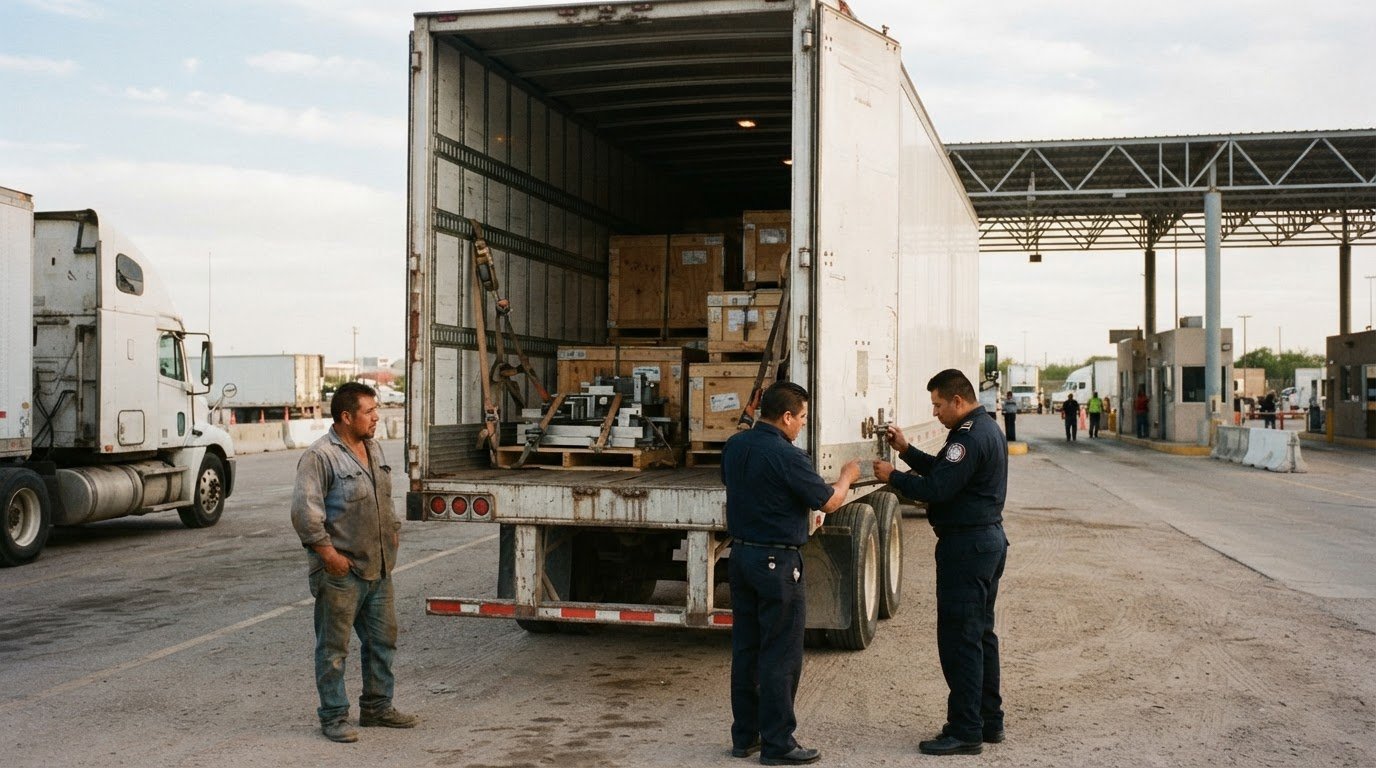
Speed does not transfer customs responsibility. For expedited freight to Mexico, the Mexican importer of record works with an authorized customs broker, who prepares and submits the pedimento for each commercial shipment. The carrier transports the freight, while clearance depends on the importer, broker, and accurate shipment documents.
You need the shipment moving quickly, with its paperwork and border handoff managed precisely. A missing document or unclear division of responsibility can disrupt the plan. This guide explains who handles customs clearance and what each party contributes, so you can coordinate the crossing from the start.
You’ll also learn how expedited ground freight, air freight, charter, and hand-carry fit different timing and cargo requirements. The sections ahead cover broker coordination, key documents, and the role of each transport method in a US-Mexico shipment.
Key Takeaways
- Map the border handoff and Mexico-side delivery leg before choosing a transport plan.
- Prepare commercial documents for broker review before pickup to support a coordinated crossing.
- Match ground, air, charter, or hand-carry transport to the shipment’s urgency and handling needs.
- Use the shipment’s origin, destination, cargo, and route requirements to narrow the service plan.
- For complex or time-critical freight, align transportation planning with customs documentation from the outset.
Cross-border freight transportation and customs clearance
A US-Mexico shipment depends on coordinated transport, customs documentation, and a clear border handoff. The route and operating model determine whether the freight stays on one trailer or transfers to another.
Ground Expedite and Cross-Border Services
Ground expedite moves time-sensitive freight by road, while full truckload and less-than-truckload services suit different shipment sizes. Cross-border full truckload freight typically takes 2 to 5 business days; less-than-truckload freight typically takes 5 to 8 business days. Compare the delivery window, cargo dimensions, and handling needs when selecting a service. Air freight, charter, and hand-carry can serve shipments that need a different transport plan.
Customs clearance is a separate responsibility from transportation. The Mexican importer of record works with an authorized Mexican customs broker, who coordinates the import process and prepares the required entry paperwork. A commercial invoice for a shipment to Mexico should be in Spanish and identify the parties, goods, and goods’ origin. The Mexican Pedimento Aduanal serves as the tax receipt for a cross-border shipment. According to Servicio de Administración Tributaria, Mexico applies a 16 percent IVA to virtually all imports, including goods that qualify for USMCA duty relief.
Laredo, Texas, is a major crossing point: it handles approximately 40% of bilateral truck trade between the United States and Mexico. For time-critical freight routed through Laredo, align the pickup schedule, customs broker, and destination handoff before dispatch. A crossing plan needs to account for border processing as well as road transit. When shipment information is complete, customs clearance in Mexico usually takes 1-2 business days.
At the border, the operating model determines whether the original trailer continues into Mexico or the freight transfers to a Mexico-authorized carrier through transloading. A transfer adds a handling point, so shipment condition and custody records matter. The carrier and broker need compatible timing to prevent freight from waiting between arrival on the US side, customs release, and pickup on the Mexico side.
Carrier Capacity and Shipment Visibility
Carrier capacity affects whether the right equipment can be assigned and whether the border handoff fits the schedule. Confirm the cargo’s dimensions, weight, loading needs, and delivery location before dispatch. For truckload freight, planning must also account for the trailer type and the Mexico-side carrier’s ability to receive the load.
Track key milestones: pickup, border arrival, customs release, trailer transfer when required, and final delivery. Clear status updates help teams identify a document hold or missed handoff before it disrupts the next leg. Agree on who communicates each milestone and who escalates exceptions.
Delay risks include incomplete paperwork, customs holds, and missed carrier transfers. Damage or theft risks can increase when freight changes trailers or custody without clear records. A planned handoff, shipment-condition records, and milestone visibility help manage these risks during expedited transport.
Domestic carriers, freight forwarders, and customs brokers
Each party has a distinct role in a US-Mexico shipment. Clear ownership of transport, customs entry, and paperwork helps prevent gaps at handoffs.
Customs Broker Coordination
The freight forwarder coordinates transport across the border, while the customs broker manages the applicable import process. The broker reviews shipment details, confirms duties and taxes, and prepares entry paperwork. The Mexican importer of record works with an authorized Mexican customs broker. For commercial freight, arrange broker support and share shipment documents before pickup so the broker can review them before dispatch.
A standard ground shipment may involve a US-side carrier, a freight forwarder, a Mexican customs broker, and a Mexico-side drayage company. The forwarder checks shipment details and coordinates with the Mexican broker. Once the consignee pays applicable duties, a local drayage company can handle the next transport leg. Assigning each party’s role in advance clarifies who handles border arrival, customs questions, and onward movement.
Shipping and Customs Documentation
Build the paperwork around the goods, origin, parties, route, and direction of travel. Documents may include a bill of lading, a Carta de Instrucciones with shipment details, and DDOA forms when applicable. Product-specific records may also be needed to demonstrate compliance with Mexican safety and performance requirements. The broker uses these documents to prepare the entry, while the carrier needs the paperwork required for its transport leg.
For US exports to Mexico, an EEI filing is generally required when any single Schedule B/HTS commodity line exceeds 2,500 USD, according to the U.S. Census Bureau. A USMCA certification of origin uses nine data elements. Applicable origin documentation can support a claim for preferential treatment, so align the goods’ origin information with the commercial paperwork. Do not assume that a transport booking includes customs entry or that one document replaces another.
Mexico requires a CFDI with Complemento Carta Porte version 3.1 for every in-country freight leg; this version has been mandatory since July 2024. Coordinate the Complemento Carta Porte with the carrier when arranging pickup for freight bound for Mexico. Since the document applies to the domestic leg, coordinate its preparation with the party arranging that transport. Review the direction of travel and each leg before dispatch, including any trailer transfer.
For expedited freight, document coordination is part of the transport plan, not a last-minute administrative task. A missing or mismatched record can hold up broker processing or a carrier handoff. Discuss cross-border shipment coordination when transport and customs paperwork need to move together.
Charter and hand-carry options
Size and weight limits depend on the selected vehicle, trailer, aircraft, and route. Commodity acceptance depends on cargo classification and handling needs. Hand-carry is for non-hazardous cargo, with a team member accompanying the shipment from pickup to delivery.
Choose a charter when the shipment’s urgency, dimensions, or routing needs call for a dedicated aircraft plan. The aircraft must suit the cargo’s weight, dimensions, loading method, and destination. A logistics coordinator can align pickup, airport handling, customs arrangements, and final delivery as one movement. Confirm cargo details and destination before planning the departure sequence.
Hand-carry suits compact, time-critical items that can travel with an accompanying team member. The service coordinates pickup, flight transport, and delivery under a continuous custody plan. It can reduce reliance on a multi-stop freight itinerary, but the shipment still needs appropriate documentation and customs coordination. Confirm that the cargo is non-hazardous and can be handled within the planned travel arrangements.
Ground options remain relevant when cargo can move by road and the delivery window allows cross-border truck transit. Full truckload service lists capacity of 44,000 lbs, with trailer lengths of 48 to 53 feet. Those figures help frame vehicle planning, but dimensions, loading access, and route conditions also affect equipment suitability. A carrier’s capacity must match the actual freight, not only its stated weight.
For air freight, compare the airport-to-airport schedule with the full door-to-door sequence. Pickup, export processing, flight availability, Mexican customs clearance, and final delivery all shape elapsed time. Chargeable weight is based on the greater of actual gross weight and volumetric weight; volumetric weight uses dimensions in centimeters divided by 6,000. This calculation can affect aircraft planning even when cargo is physically light.
Delivery speed depends on the shipment’s urgency and the chosen transport chain. Ground service may suit a load that can travel by truck; air freight may reduce the line-haul portion, while charter offers a dedicated flight plan. Air freight planning also needs to account for airport handling and onward transport after arrival. Confirm pickup readiness, cargo measurements, customs paperwork, and delivery access before dispatch.
Use these details to select a practical option: cargo type and dimensions, required delivery window, pickup point, destination, and customs plan. For example, a compact urgent component may suit hand-carry, while heavier freight may need a truck or charter plan. Matching the mode to the shipment helps coordinate each carrier handoff without assuming every option suits every commodity.
Freight service coverage in the US and Mexico
Cross-border service coverage depends on the shipment’s US origin, Mexican destination, transport mode, and handoff plan. The logistics plan should connect each pickup and delivery point with the required documents and customs clearance steps.
Expedited and Priority Freight Services
Expedited ground and priority services are planned around the delivery window, cargo weight, and route. For an urgent shipment, identify the pickup location, border crossing, final destination, and any carrier transfer. Air Next Flight Out (NFO) routes freight on the next suitable scheduled flight. It can reduce waiting for a later departure, but airport handling and customs still affect the full journey.
Use NFO when the flight schedule fits the cargo and delivery need. A practical sequence is to confirm the shipment’s dimensions and weight, coordinate pickup, prepare documents for the broker, and plan onward transport from the arrival airport. For example, a component needed quickly at a Mexican production site may require both an early flight and a prearranged ground connection. The fastest flight alone does not complete delivery.
Carriers Serving US-Mexico Routes
A route may involve a US domestic carrier, a cross-border carrier, and a Mexico-authorized carrier for the final leg. Some operating models keep freight on the same trailer; others transfer it at the border. Carrier coordination should account for the shipment’s origin, destination, equipment needs, customs release, and responsibility for each handoff.
Mexico-side service areas named for cross-border freight include Tijuana, Nogales, Mexicali, Ciudad Juárez, Piedras Negras, Nuevo Laredo, Reynosa, Matamoros, and San Luis Río Colorado. These destinations span different border regions, so route planning should match the consignee’s exact location rather than rely on a city or state alone. A shipment addressed to Ciudad Juárez, for example, needs a delivery plan for that destination and its receiving point.
For coverage planning, map the US pickup address to the Mexican delivery address, then identify the carrier responsible for each segment. Confirm whether the shipment requires a direct trailer movement or a border transfer. Coordinate the transfer point with customs release and the next carrier’s arrival, so freight does not wait without an assigned onward movement.
Air freight expands routing options when road transit does not fit the required schedule. The plan must connect the US origin airport with the Mexican arrival point, then account for clearance and final delivery. Ground service may suit a destination far from an airport or cargo whose size and handling needs favor a trailer. Choose a mode based on the complete route, not a single leg.
Share the destination, cargo weight and dimensions, required delivery date, and receiving instructions during route planning. These details help align carrier capacity, airport or border handoffs, and final-mile delivery across the US-Mexico route.
Which expedited freight carriers serve US-Mexico routes?
US-Mexico expedited shipments may move through domestic carriers, cross-border carriers, or Mexico-authorized carriers. The right operating model for expedited freight to Mexico depends on the route, cargo, delivery point, and border handoff. Some carriers work directly with Mexican customs brokers and deliver to the final destination. Others coordinate a carrier transfer after freight reaches the border.
A freight forwarder can coordinate the transport chain without treating every leg as a single carrier movement. It matches the US pickup, border crossing, customs release, and Mexico-side delivery. Before dispatch, establish which carrier handles each leg and who communicates delays. This matters when a shipment transfers between trailers or carriers, because the next vehicle’s arrival must align with release and loading.
For a route that stays on one trailer, confirm that the carrier’s operating model supports the planned crossing and destination. For a transload, define the transfer point and who is responsible for receiving and releasing the freight. A Mexico-authorized carrier may take over the final leg after customs approval. The freight forwarder should coordinate the schedule and share status updates across each handoff.
Select a carrier based on the shipment profile, not a company name alone. Provide the origin and consignee location, cargo dimensions and weight, required delivery timing, and any special loading or handling needs. These details help determine whether ground transport fits or another mode is needed. They also help the forwarder identify suitable capacity and plan the customs-broker handoff.
For automotive freight, a delayed component can affect a production schedule; for industrial equipment, dimensions can shape vehicle and loading requirements. In either case, map the shipment’s milestones with the transport coordinator: pickup, border arrival, customs release, any trailer transfer, and final delivery. Assign responsibility for each milestone rather than assume the handoff will happen.
Service quality also depends on communication and document control. The carrier needs correct shipment details and transport paperwork before pickup, while the customs broker needs commercial documents for entry processing. Agree on how status changes will be shared and escalated. Clear responsibilities help your team distinguish a carrier delay from a customs hold or missed transfer.
Compare the complete transport plan: route coverage, equipment fit, broker coordination, handoff control, and delivery communication. A carrier network that reaches the border but lacks a clear Mexico-side delivery arrangement does not solve the full movement. When planning expedited freight to Mexico, align the carrier and broker roles before dispatch. Discuss a coordinated US-Mexico freight plan for a time-critical shipment.
US-Mexico expedited routes may use domestic carriers, cross-border carriers, or Mexico-authorized carriers. Depending on the operating model, a Mexico-authorized carrier may handle the final leg after customs approval.
ICAT Detroit: Expedite Ground Shipping
ICAT Detroit coordinates expedited ground shipments to Mexico when delivery timing, border handoffs, and documentation must stay aligned. Its Expedite Ground Shipping supports time-critical freight, while Project Logistics coordinates shipments with multiple transport legs or complex requirements. For cargo outside standard dimensions, Oversize Freight Handling supports specialized movement. Air Freight Shipping is another option when the schedule or route calls for air transport.
Share the shipment’s origin, destination, cargo dimensions and weight, required delivery timing, and available paperwork. These details help shape a transport plan around the cargo and route, including carrier coordination and customs documentation. For a time-sensitive or complex US-Mexico shipment, contact ICAT Detroit to discuss the logistics requirements.
Turn the route plan into a shipment plan
Planning expedited freight to Mexico starts with the shipment’s priorities: the delivery deadline, cargo requirements, and border handoff must work as one plan. The next step is to define the scope for pickup, transport, customs coordination, and final delivery. This gives each party a clear role before the freight moves.
ICAT Detroit can align Expedite Ground Shipping with the shipment’s route and timing. For cargo that needs specialized movement, Oversize Freight Handling addresses nonstandard dimensions; Project Logistics coordinates shipments with multiple moving parts. The right plan depends on the freight and delivery requirements, not speed alone.
Bring the origin, destination, cargo dimensions and weight, required delivery date, and available shipping documents into the planning conversation. These details help define the scope and identify coordination needs across transport and customs. A precise starting brief makes the next decisions clearer and keeps the shipment plan focused on your operational priorities.
Discuss your freight requirements with ICAT Detroit and take the next step toward a coordinated cross-border shipment.
Frequently Asked Questions
Who is responsible for customs clearance?
The Mexican importer of record works with an authorized Mexican customs broker for import clearance. The broker reviews shipment information, coordinates the import process, and prepares required entry paperwork. The carrier transports the freight, while the forwarder can coordinate movement and communication among the parties. For example, a shipment changing carriers at the border needs its transport handoff aligned with the broker’s clearance process and the Mexico-side carrier’s schedule.
How are duties and tariffs calculated?
Mexico’s import duty depends on the goods’ tariff classification and customs value, while eligibility for preferential treatment depends on applicable origin rules and supporting documents. The product description, materials, and country of origin help determine classification and treatment. Taxes are separate from duties: qualifying for USMCA duty relief does not necessarily remove other import taxes. Ask the customs broker to explain the calculation for the specific goods and declared value.
How can an expedited freight provider help logistics managers reduce border delays?
A provider can coordinate the transport schedule with the customs broker’s document review before pickup. This gives the broker time to identify missing commercial details while the carrier plan is still being arranged. Logistics managers can also establish who handles border arrival, customs questions, status updates, and onward movement. For a production-critical component, assigning these responsibilities before dispatch helps teams respond quickly to a document issue or missed transfer.
How do FAST and C-TPAT support faster processing?
FAST and C-TPAT relate to trusted, security-focused cross-border trade, but neither replaces customs entry documents or clearance. Carriers participating in C-TPAT are less likely to be examined at US ports of entry. Treat participation as one operational factor, not a substitute for accurate paperwork or broker coordination. Confirm that the carrier and crossing plan fit the shipment’s route and required border handoffs.
How does freight move from the United States into Mexico?
A US carrier moves the freight toward the border, where it follows the planned customs and carrier handoff process. Depending on the operating model, the freight may stay on the same trailer or transfer to a Mexico-authorized carrier. After customs approval, the Mexico-side carrier continues to the destination. For example, a shipment destined for a factory needs a plan that includes its receiving location and final transport leg.
How fast can you deliver?
Delivery timing depends on the origin, destination, transport mode, border process, and receiving arrangements. Ground transport suits freight that can move by truck within the planned schedule; air freight, charter, or hand-carry may fit different urgency and cargo needs. The delivery plan should account for pickup readiness, customs processing, and the final transport leg, not only travel time between US and Mexican cities.
What expedited freight services are available from the US to Mexico?
Options include expedited ground transport, air freight, charter, and hand-carry for non-hazardous cargo. The right mode depends on the shipment’s urgency, dimensions, weight, commodity, and destination. For example, a compact urgent part may suit hand-carry, while freight requiring road transport can move by ground. Oversized cargo may need specialized planning. Match the transport method to the cargo requirements and border coordination needs.
How long does expedited shipping from the US to Mexico take?
Cross-border full truckload freight typically takes 2 to 5 business days, while less-than-truckload freight typically takes 5 to 8 business days. These ranges describe the transport service, not a universal door-to-door commitment. Pickup readiness, customs processing, transfer timing, and destination access also shape the shipment schedule. Air freight, charter, and hand-carry follow different routing and handling sequences, so assess the full movement against your required delivery date.