
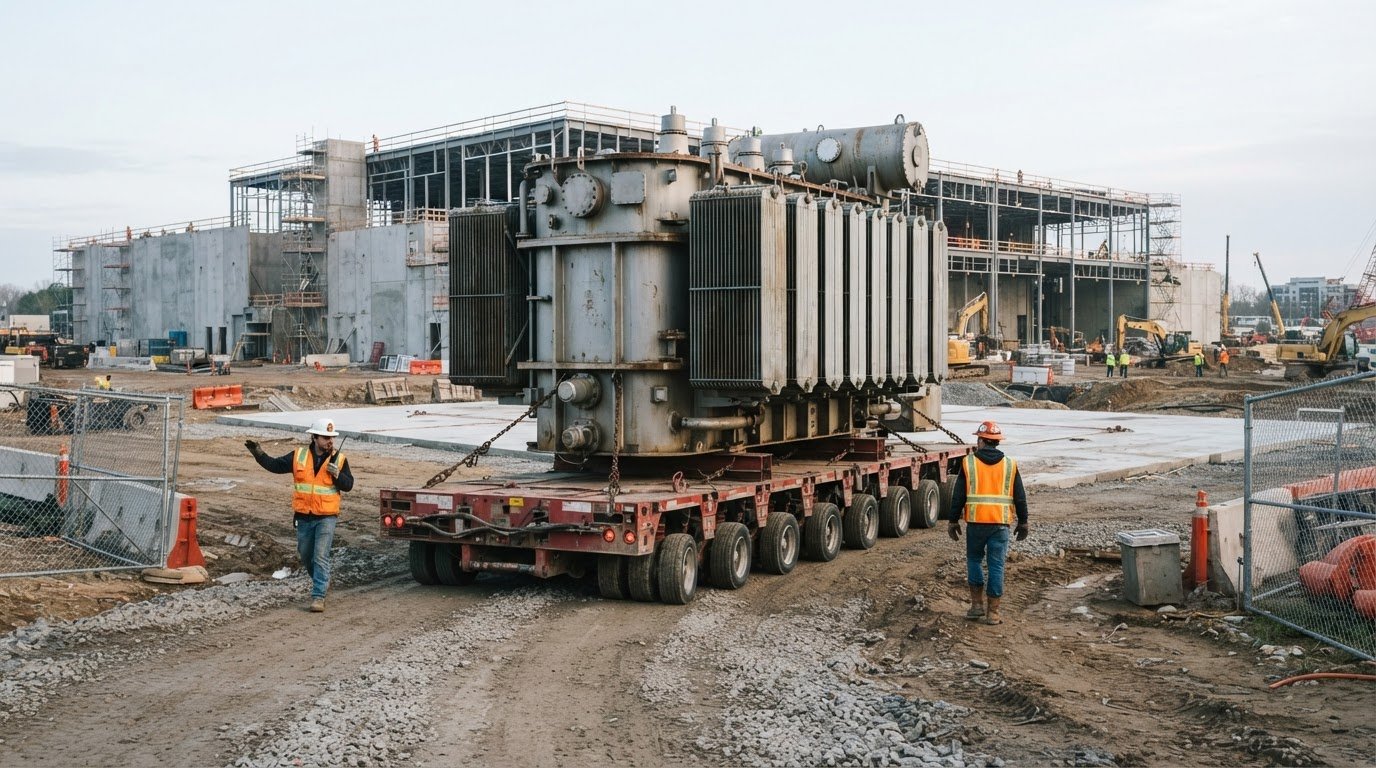
A shipment can arrive on time and still put a complex build at risk if it is not coordinated with site access, installation sequence, and other deliveries. Engineering project logistics brings these moving parts together, aligning cargo, transport modes, timing, route constraints, and delivery requirements with the needs of the project. Unlike standard freight, it plans for the full movement and its role in the build, not just the trip from origin to destination.
Oversized equipment needs specialized handling, but coordinating it with schedules, access restrictions, documentation, and changing site conditions is often the harder task. This article explains what project logistics involves, how it differs from routine freight, and how planning can help manage safety and schedule risks.
You’ll also see how route planning, multimodal coordination, and delivery sequencing support industrial projects, from energy infrastructure to data centers and manufacturing facilities. The aim is practical: understand which logistics challenges need project-level coordination, what that coordination covers, and when experienced freight support can help keep a complex build moving.
Key Takeaways
- See how project logistics coordinates cargo, transport modes, and delivery timing around the needs of a complex build.
- Understand how marine transport fits into project cargo planning and connects with the rest of the shipment.
- Learn how identifying route, handling, and schedule risks early can support safer, more reliable deliveries.
- Recognize how owners, manufacturers, contractors, EPCs, and transport providers align their roles across a project.
- Use the distinction between project logistics and standard freight to identify when a shipment needs coordinated, project-level planning.
What is Project Logistics?
Project logistics coordinates complex cargo movements around a build’s route, timing, handling, and delivery needs. Engineering project logistics connects transport decisions with site access, installation sequence, and the teams responsible for each transfer.
Oversize and Multimodal Transport
Oversize and multimodal transport moves cargo across two or more transport modes when a single mode cannot meet the shipment’s route or handling needs. A shipment might travel by vessel, then transfer to road transport for its final approach. Each transfer needs coordinated equipment, timing, and cargo-handling instructions. This matters when cargo dimensions or weight limit available routes, terminals, or delivery access. A connected project logistics plan aligns those handoffs with the delivery sequence.
Permits and Regulations for Oversized Loads
In the United States, oversized-load permits and route restrictions depend on the cargo and planned route. Requirements can differ across the jurisdictions a shipment crosses, so the movement plan must account for permits, bridges, and site constraints before dispatch. Route analysis identifies restrictions that could affect the equipment or delivery path. This connects regulatory planning with practical access, rather than treating permits as paperwork separate from transport.
Project Cargo Planning Steps
Project cargo planning defines the shipment, then coordinates its movement from origin to delivery. The process starts with cargo dimensions, weight, handling needs, origin, and destination. Planners assess transport modes, route constraints, required permits, transfer points, and site access. They then align delivery timing with the receiving site and document responsibilities for each handoff. Making these decisions early helps identify conflicts before cargo is in transit, when changes could affect other project activities.
Marine Logistics for Project Cargo
Marine logistics coordinates the vessel movement, port transfers, and onward transport needed to deliver project cargo by water. Cargo may require specialized vessel or handling arrangements, followed by a carefully timed transfer to road or another mode. NASA’s Pegasus barge moves the 212-foot Space Launch System core stage between facilities on defined routes. That example shows why waterway access, transfer points, and delivery sequence belong in one movement plan, not separate transport bookings.
Choosing a Project Logistics Provider
Choose a project logistics provider whose planning capability matches the cargo, route, transport modes, and site requirements. Look for coordination across key interfaces, including route analysis, permit planning, marine transfers, and delivery sequencing. Clear responsibilities and communication between transport and receiving teams matter as much as choosing a suitable mode. The right provider can coordinate the shipment’s specific constraints from origin through final delivery.
Risk management, safety, and schedule reliability
Project risks often span transport, site access, inventory, and installation schedules. A delayed component can disrupt connected work, so teams need clear controls before cargo moves.
Risk Management and Contingency Planning
Risk management identifies threats to cargo, people, and delivery sequence, then assigns practical responses. For a project with a transformer, for example, planners can map route restrictions, transfer points, weather exposure, and site-readiness dependencies. Each risk needs an owner, a trigger for action, and a defined response. That structure helps teams act on a disruption instead of improvising after it affects the schedule.
Contingency planning considers what happens when an agreed route or delivery window changes. Teams can assess alternate routing, revised delivery sequencing, or temporary storage before dispatch. These options depend on the cargo, route access, and receiving site’s capacity. A useful plan records who authorizes a change and how affected teams receive updates, keeping the response coordinated across transportation and construction operations.
Modular and prefab logistics can shift work offsite, supporting speed, safety, and repeatability. Preparing assemblies away from a constrained construction area, for example, can reduce the number of activities competing for access. The plan still needs to connect offsite preparation with transport timing and installation sequence. Otherwise, completed modules may arrive before the site is ready to receive or position them.
Safety and Schedule Reliability
Safety and schedule reliability depend on matching cargo handling to the worksite and delivery sequence. A planned arrival is useful only if the receiving area, equipment, and installation crew are ready. For heavy equipment, coordinators align arrival timing with site access and unloading arrangements. This reduces avoidable waiting and limits conflicts with other scheduled work.
Each handoff needs clear instructions. Transport teams, site personnel, and installation leads should share cargo identification, handling requirements, delivery timing, and escalation contacts. If documentation is incomplete or the receiving area is unavailable, an agreed escalation path helps teams respond without issuing conflicting instructions. Documented responsibilities make safety controls actionable at each transfer point.
Protecting the schedule means checking dependencies, not simply tracking a vehicle. If a component supports a planned installation, teams can connect its expected arrival with site readiness and related materials. This can expose a mismatch early. For example, holding a delivery until its receiving area is prepared may be safer and more useful than sending it into a congested work zone.
Inventory Management and Warehousing
Inventory management connects cargo location and condition with the project’s installation sequence. A receiving record can identify each item, its status, and intended destination, while staging separates near-term materials from later deliveries. Warehousing can provide a holding point when the site cannot receive everything at once. Decisions depend on storage needs, shipment timing, and when crews can install each component.
A data center project, for example, may need equipment delivered in coordinated stages rather than all at once. A staging plan helps prevent early arrivals from competing for limited site space and gives project teams a clearer view of what is available for upcoming work. Storage does not replace schedule coordination; it creates another planned handoff that needs accurate records and assigned responsibility.
For projects with connected deliveries, discuss how schedule risks, staging, and receiving requirements fit together through project logistics coordination.
Logistics support for owners, manufacturers, contractors, EPCs, and transport providers
Complex projects bring together owners, manufacturers, contractors, engineering, procurement, and construction teams, as well as transport providers. Each group controls different information and decisions. Logistics coordination connects those responsibilities to cargo movement, site needs, and project timing. For a turbine installation, for example, equipment delivery must align with the construction team’s readiness and the transport provider’s route plan.
Project owners set delivery priorities, site constraints, and major schedule requirements. They also determine which milestones depend on specific equipment arriving. A logistics plan translates those priorities into shipment sequences and delivery windows. If an owner schedules installation around a transformer arrival, the plan must link that arrival with site access, unloading arrangements, and the work planned immediately afterward.
Manufacturers provide cargo details, packaging requirements, readiness dates, and handling instructions. Accurate specifications help planners assess transport modes and transfer needs. A manufacturing delay can affect multiple shipments when several components support the same installation. Sharing production status with the logistics team gives project participants time to adjust shipment sequencing before freight reaches the origin terminal.
Contractors and EPC teams connect transport plans with field execution. They identify site access limits, laydown areas, lifting sequences, and installation dependencies. For example, an EPC team coordinating modular equipment deliveries needs the arrival order to match the assembly plan. Early delivery can cause congestion if the receiving area is not ready; late delivery can interrupt planned work. Site teams therefore need current shipment milestones and clear escalation paths.
Transport providers contribute mode-specific planning and execution details. Their input helps align vessel, road, rail, or air movements with transfer points and final delivery requirements. A road carrier needs shipment dimensions and destination access details to plan the movement. A marine provider needs cargo and port information to coordinate the sea leg. Sharing these details across providers reduces gaps between transport stages.
Cloud-based tools, route simulations, and tracking can help align field and office teams. A shared view of shipment status helps project staff connect transport progress with site readiness. Route simulations support discussion of constraints before movement begins, while tracking shows whether progress still fits the planned delivery sequence. These tools support coordination, but teams still need named responsibilities and a clear process for acting on new information.
Effective coordination depends on timely, usable information. Project participants can establish a shared shipment record with cargo identifiers, planned milestones, handling instructions, and delivery contacts. The owner communicates schedule priorities; manufacturers report cargo readiness; contractors update site conditions; and transport providers report movement status. When a detail changes, designated contacts can assess the effect on connected deliveries and field work.
The value is a clearer connection between purchasing, production, transport, and installation. Each participant can see how their decisions affect the next handoff. This shared operating picture helps teams resolve conflicts early, preserve schedule alignment, and connect cargo movement to the build’s actual needs.
Project logistics for data centers, energy, and industrial construction
Large construction projects move equipment with different dimensions, handling needs, and transport constraints. Engineering project logistics treats those cargo characteristics as planning inputs, not dispatch details. For data centers, energy facilities, and industrial plants, cargo classification helps planners match equipment packages with suitable transport methods and handling arrangements. The result is a movement plan built around the physical requirements of each shipment.
Data center builds can involve server equipment, power systems, and cooling equipment, each with distinct packaging, handling, and delivery requirements. Clear identification helps distinguish individual items and connect shipment records with procurement packages. This matters when manufacturers, contractors, and project teams use different names for the same equipment. Consistent descriptions help prevent confusion during handoffs and receiving.
Energy projects present distinct cargo profiles. Modern land-based wind turbine blades exceed 170 feet in length. Their dimensions affect loading, transport equipment, and route feasibility. A blade movement therefore needs cargo-specific planning from the point of origin through final delivery. Wind project logistics also considers how the blade’s shape and length affect handling at transfer points.
Energy construction may involve turbines, generators, and supporting infrastructure, each with its own loading and transport considerations. Identifying requirements early gives planners a basis for selecting movement methods and coordinating specialized handling. Offshore projects add marine transport interfaces, while land-based developments depend on suitable ground movement. Cargo type and project setting shape the plan.
Industrial construction involves another mix: production machinery, process equipment, and structural components. A machine package may arrive in separate sections, each with distinct handling instructions. Recording those details helps teams identify what belongs together and which components need special care. Accurate cargo data also supports equipment selection and clear communication across manufacturers and transport providers.
Project procurement documents provide useful planning inputs. Equipment descriptions, packaging details, origin information, and cargo readiness dates connect purchasing decisions with transport requirements. When a specification changes, the movement plan can reflect the updated cargo characteristics. This is especially relevant when manufacturers ship equipment in multiple packages or prepare components at different facilities.
Across these sectors, the key distinction is the cargo profile. A wind blade’s length, a data center’s varied equipment packages, and an industrial machine’s separate sections each create different transport demands. Project teams can use these characteristics to shape handling instructions, transport choices, and shipment records. This cargo-specific foundation makes complex construction movements easier to coordinate from planning through delivery.
How project logistics differs from standard freight
Standard freight typically moves a defined shipment between an origin and destination. Project logistics coordinates cargo movement with a broader operational plan. For example, a pallet moving to a warehouse needs transport and delivery coordination. An industrial press moving to a plant may also require route analysis, specialized handling, staged transfers, and site readiness.
The planning scope changes first. Standard freight planning focuses on shipment details, mode, timing, and delivery instructions. Project planning connects those details to construction milestones and installation sequence. A machine arriving at a factory, for example, must fit the site’s unloading plan and production schedule. The delivery date matters, but so does whether the receiving team can position the machine on arrival.
Route requirements can also set project cargo apart. A regular shipment may fit established transport routes and handling processes. Oversized or heavy cargo can require closer review of dimensions, weight, access, and transfer points. A route suitable for one vehicle may not work for specialized equipment. Project planning considers these constraints before dispatch, then coordinates transport stages around the selected route.
Coordination is broader, too. Standard freight may involve a shipper, carrier, and receiver. A complex project can add manufacturers, contractors, site teams, and multiple transport providers. Consider a fabricated structure moving from a production facility through a port to a construction site. Each handoff depends on the one before it, so teams must align cargo readiness, transfer timing, documentation, and site access.
Project logistics also connects delivery timing with consequences beyond the shipment itself. If a component supports a scheduled installation, its arrival can affect labor, equipment, and the next construction activity. Standard freight tracking reports movement status; project coordination uses that status to assess effects on the work plan. If timing shifts, teams can evaluate resequencing, staging, or other adjustments.
Documentation and compliance matter in both approaches, but project shipments may require coordination across more transport stages and parties. A cross-border industrial shipment, for example, involves documentation as well as changes in mode and delivery planning. Consistent cargo descriptions and clear responsibilities help maintain continuity. Missing or conflicting information can complicate a handoff, so project controls connect records with the full movement plan.
Choose the planning approach based on the shipment’s demands. A routine, self-contained movement may need standard freight coordination. Cargo with unusual dimensions, multiple modes, strict site sequencing, or several responsible teams benefits from project-level planning. The key test is whether transportation must be synchronized with other project work. If it must, discuss your shipment’s route and delivery requirements through a project logistics consultation.
ICAT Detroit: Project Logistics
ICAT Detroit coordinates project cargo around shipment requirements, transport modes, and delivery schedules. Its Project Logistics and Oversize Freight Handling support complex moves that require coordinated planning for cargo dimensions or multiple transport stages. For time-sensitive movements, Expedite Ground Shipping and Air Freight Shipping can address specific delivery needs.
For example, ICAT coordinated 56,000 lbs of automotive tooling from China to Mexico on a strict 14-day deadline. That shipment illustrates the coordination required when cargo, international movement, and a firm schedule converge. If your build depends on oversized equipment or carefully timed deliveries, ICAT Detroit can discuss how its project logistics services fit your requirements.
Contact ICAT Detroit to discuss your project cargo needs.
Set the Next Project in Motion
Use the closeout of one build to strengthen the next. Record which transport assumptions held, where handoffs needed adjustment, and what information helped project teams. These lessons can inform future engineering project logistics plans and help your organization make clearer decisions earlier as new projects move from design into execution.
ICAT Detroit offers Project Logistics, Oversize Freight Handling, and Expedite Ground Shipping for complex and time-sensitive freight needs. Discuss how these services may fit your next project’s requirements. Contact ICAT Detroit about project logistics to start the conversation and move your planning forward.
Frequently Asked Questions
What is engineering project logistics?
Engineering project logistics organizes freight around an engineering project’s requirements, rather than treating each shipment on its own. The defining factor is the connection between freight decisions and project execution. An equipment package, for example, may need coordination with procurement, construction, and commissioning teams. That context shapes responsibilities, decision sequences, and how teams assess whether the transport plan supports the cargo’s intended use.
What services are included in engineering project logistics?
Services depend on the project’s cargo and movement requirements. A plan may coordinate transport, customs and trade documentation, specialized cargo handling, packaging, or warehousing. The practical question is which activities need to be managed together. An international shipment, for example, may need transport arrangements aligned with customs paperwork and packaging details. Defining that scope keeps responsibilities clear across the shipment lifecycle.
How are oversized and heavy-lift cargo shipments transported?
Transport arrangements should match each load’s dimensions, weight, handling needs, and route. Before movement, teams establish how cargo will be prepared, loaded, transferred, and received. They also align handling instructions and responsibilities across the parties involved. A shipment with separate components, for example, may need clear identification and handling records for each piece so receiving teams can account for the full delivery.
How does project logistics differ from standard freight forwarding?
The difference is the scope of coordination. A shipment can move between locations without affecting other work, while project cargo may be tied to procurement decisions, construction activities, or commissioning. A useful test is whether a transport decision needs input from project teams beyond shipping. If equipment movement affects another team’s planned work, coordination must account for those connected decisions.
What are common risks and delays in engineering project logistics?
One often-overlooked risk is inconsistent information across purchase records, packing documents, and cargo labels. If teams identify the same component differently, receiving and inventory records can be difficult to reconcile. Changes to equipment specifications can create a similar disconnect. A consistent cargo identification method and aligned shipment records help resolve discrepancies before they complicate receiving or project accounting.
How can companies reduce project logistics costs and delivery risks?
Start by reducing avoidable handling and late changes. Clear cargo specifications help teams select suitable packaging and transport arrangements before work begins. Reviewing whether packages can move together may also avoid unnecessary separate movements when the cargo and schedule allow. Keep procurement, shipping, and receiving records consistent so teams spend less time resolving mismatched information and can make decisions using the same shipment details.