
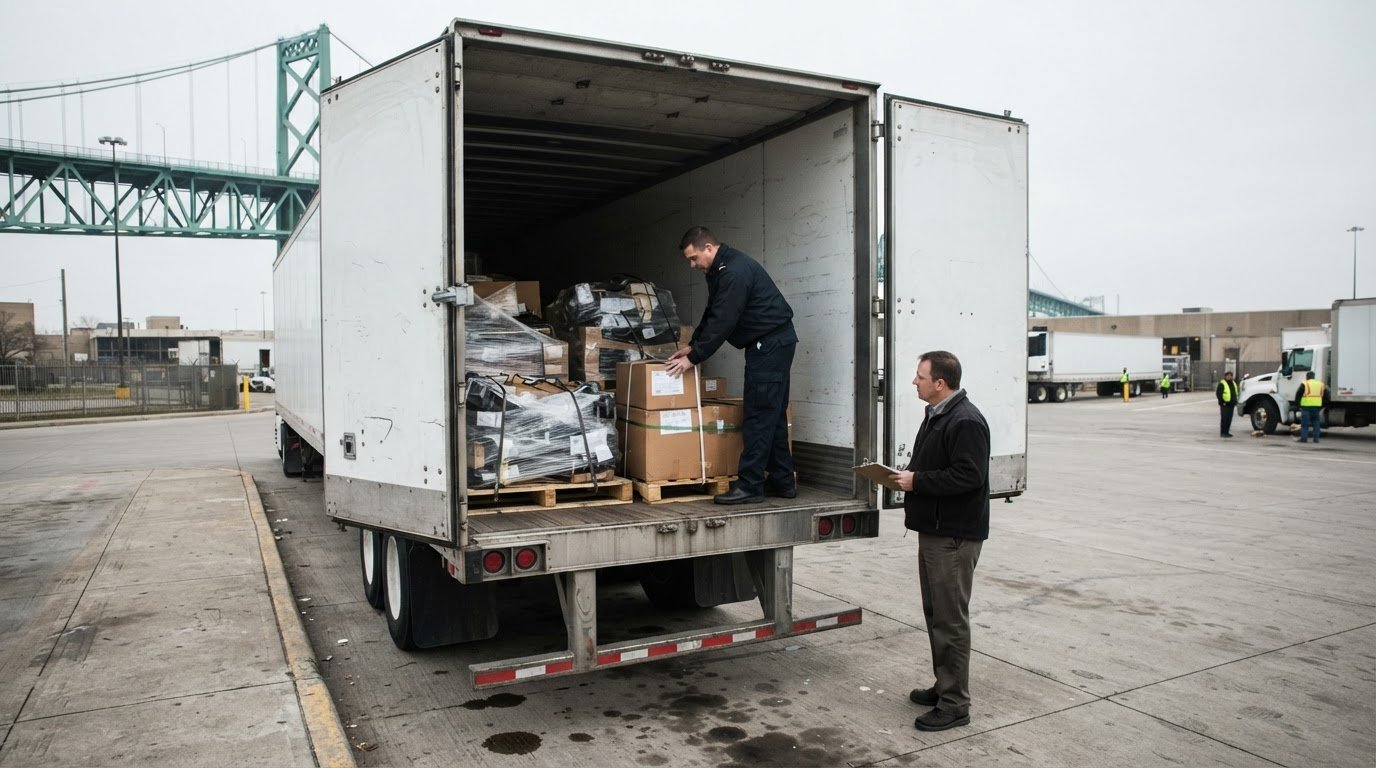
For a U.S.-Canada shipment, customs clearance is handled in the country where the goods enter. For cross border customs clearance in Michigan, identify the destination first: use a U.S. broker for entry into the United States and a Canadian broker for entry into Canada. At Detroit, matching the broker to the entry country is the first step toward a prepared border crossing.
Choosing the right broker is only part of the process. Your shipment also needs accurate import documents, clear product details, and a logistics plan that keeps freight and customs coordination aligned. This guide explains how to arrange clearance for the Detroit crossing, prepare documentation, manage compliance responsibilities, and plan Michigan-to-Canada logistics. Organize these details before dispatch so customs requirements stay connected to transportation planning, rather than becoming a last-minute obstacle.
Key Takeaways
- Match your customs broker to the side of the border where the shipment enters, then coordinate the handoff across the crossing.
- Prepare a pre-alert with shipment documents and clear product details so the customs entry can be reviewed before arrival.
- Keep responsibility for accurate shipment information in view, even when a broker manages customs filings.
- Shipments valued over CAD 20 may incur customs duties when shipped to Canada, according to Canada Border Services Agency.
- Compare logistics providers by how well they align customs coordination, freight mode, cargo requirements, and delivery timing.
How do I find a customs broker at Detroit Border Crossing?
Start by matching the customs broker to the country where your goods enter. Detroit is an important crossing for truck traffic between the United States and Canada.
Michigan Broker Coverage
For freight picked up in Ann Arbor or elsewhere in Michigan, distinguish the pickup point from the customs entry point. A broker can work remotely, so confirm they can clear the shipment at its intended port. For Detroit-area truck freight, align entry preparation with the carrier’s crossing plan and arrival details.
Before dispatch, send the broker the commercial invoice, packing information, product description, and planned crossing. Ask them to flag missing entry details early and explain how they will communicate holds or document issues. This gives your shipping team a defined contact for customs questions, rather than relying on updates passed between multiple parties.
Broker Responsibilities and Cross-Border Requirements
A customs broker prepares and submits the customs entry, supports tariff classification, and coordinates clearance information with the relevant border authorities. The broker needs consistent shipment details, including the goods’ description, value, origin, and supporting documents. Your company remains responsible for accurate shipment information, so compare the entry details with purchasing and shipping records.
For U.S.-Canada freight, use a broker in the country where the goods enter. A shipment entering Canada needs Canadian clearance; one entering the United States needs U.S. clearance. U.S.-Mexico trade requires a Mexican broker and a U.S. broker. Mexican customs brokers must be licensed and legally authorized to clear freight at the specific port of entry.
Broker Selection for Michigan-Canada Shipments
How do businesses choose a customs broker for Michigan-Canada shipments? Match the broker to the entry country and crossing, then assess their experience with your goods and shipment documents. Confirm who prepares the entry, who communicates with the carrier, and how you’ll be notified about missing information or customs delays.
Agree on a clear document handoff before freight departs. The broker should receive the commercial invoice and shipment details early enough to review them, flag inconsistencies, and prepare the entry. A designated escalation contact helps your team resolve classification questions or corrections without losing track of the planned crossing.
What goods face special permits, inspections, or restrictions when imported through Michigan? Requirements depend on the product, origin, destination, and applicable controls. Give the broker a precise goods description and supporting product information before dispatch so potential requirements can be identified during entry preparation.
How long does customs clearance take at Michigan border crossings, and how can delays be checked? Most shipments clear U.S. customs in a matter of hours when documentation is clean and filed early. Ask the broker for the current entry status and whether a document issue, review, or border hold is affecting release.
Before the truck reaches Detroit, align three details:
- Entry country: Assign the broker responsible for clearance on that side.
- Shipment file: Match the invoice and product description to the goods moving.
- Updates: Set a communication path among your team, broker, and carrier.
This preparation ties tariff classification and clearance work to the shipment’s actual route. It also gives your team a direct way to respond if border processing requires additional information.
Tariff classification and import documentation
For a Detroit-Windsor commercial shipment, classify the goods, assemble the entry documents, and send them to the broker before arrival. Align the customs filing with the carrier’s transportation plan, and respond promptly to document questions.
Tariff Classification
Classification identifies the tariff category used to process imported goods. Provide a precise description, material, intended use, and product specifications so the broker can assess the appropriate HTSUS classification. A vague description, such as “machine parts,” may fail to distinguish components with different functions. Compare the proposed classification with the commercial invoice and product records before the entry is prepared.
Classification also helps determine which other agencies may need shipment information. Some U.S. imports require Participating Government Agency information and classification. Flag goods with specialized functions or materials early, then supply supporting product details for review. Keep the description consistent across the invoice, packing list, and customs entry.
Required Customs Documents
Build the shipment file around documents that describe the transaction and identify the freight. A U.S. customs entry commonly uses a bill of lading, commercial invoice, packing list, arrival notice, goods description, and HTSUS classification. Check that parties, quantities, values, and product descriptions match across each record. Differences can prompt questions and delay processing.
Commercial imports valued over $2,500 require a formal CBP entry. For shipments that may involve a participating government agency, include the relevant agency information and classification with the file. The broker uses the documents to prepare the entry and coordinate with U.S. Customs and Border Protection. Keep the records together so corrections reach the filing team quickly.
Pre-Arrival Filings and Shipment Planning
Send the broker a pre-alert with shipping documents before the goods reach the border. Early review gives the broker time to identify missing details, prepare the entry, and raise classification questions while the shipment is in transit. Include the planned route and arrival information to keep documentation and transportation aligned.
Ocean freight has a separate timing requirement: the Importer Security Filing must be submitted before loading at the origin port. The ocean broker or forwarder typically handles that filing, while the importer must provide the required data. Treat the ISF as part of pre-shipment planning, not a task to complete at the border.
Commercial Shipment Clearance Steps
What are the steps for clearing a commercial shipment at the Detroit-Windsor border? First, identify the U.S. entry side and send the broker the invoice, packing list, bill of lading, arrival notice, goods description, and classification. Next, the broker prepares the entry and coordinates with U.S. Customs and Border Protection. Your team supplies corrections or additional agency details as needed.
Before the carrier departs, reconcile the entry with the shipment file. Confirm that product descriptions, quantities, and declared values match the commercial records. For ocean freight, make sure required ISF data reaches the filer before loading at the origin port. Clean documentation filed early helps most shipments clear U.S. customs in a matter of hours.
Keep a single owner for document handoffs and response tracking. If a broker flags a discrepancy, route the question to the person who can verify the product or transaction record. For help coordinating customs documentation with shipment planning, discuss your cross-border shipment requirements.
Customs compliance and international trade
U.S. importers remain legally responsible for accurate shipment information, even when a broker prepares customs entries. Build compliance checks into purchasing, transportation, and supplier handoffs so international shipments move with consistent records.
Importer Compliance Obligations
Keep shipment information aligned from purchase order through entry preparation. Compare the commercial invoice, product description, declared value, origin details, and classification before filing. If a supplier changes a component or description, update the shipment records and notify the broker. A broker can prepare and submit information, but the importer remains responsible for its accuracy.
Assign an owner to each compliance task. Purchasing can review the supplier’s invoice, for example, while the product team verifies technical details. The person coordinating the entry can then reconcile the records before use. A documented handoff helps prevent different teams from working with conflicting versions of the same shipment information.
Some U.S. imports may require Participating Government Agency information and classification. Identify goods by their function and composition, then organize relevant product information and any applicable certificate for review. Keep supporting records with the shipment file so your team can find them when questions arise during entry preparation.
Review the completed entry against the transaction records. Check the reported quantities, origin, classification, and value. Record who approved corrections and when the updated information reached the broker. This gives your business a clear account of the decisions made for the shipment.
Customs Bonds and Compliance
If a customs bond is part of your shipment process, keep related records with the entry file and coordinate the paperwork with the customs broker. Make sure the shipment team knows who holds the documents and who can provide them when needed. This is a document-control step, not a substitute for checking the accuracy of the customs entry.
Keep bond records separate from other shipment paperwork, then link them to the applicable entry in your internal file. If the parties or shipment details change, send the revised information to the person managing customs documentation. Avoid relying on an outdated file version when teams update the shipment plan.
Bonded warehouses and foreign trade zones can be options for managing shipments during duty changes. Consider them as part of the broader customs plan, alongside shipment timing and destination. Keep records of any storage or processing decisions with the shipment documentation.
Use a clear control sequence for each international shipment:
- Assign ownership: Name the person responsible for records and corrections.
- Reconcile information: Match supplier, product, and entry details.
- Organize bond paperwork: Keep related records connected to the applicable shipment file.
- Retain decisions: Save approvals, certificates, and broker communications together.
When trade conditions change, review how to manage the shipment plan and its records. Keep suppliers, the broker, and the importer working from consistent information. This supports compliance across the international supply chain and makes filing decisions easier to trace.
Michigan-Canada freight corridors and border crossings
Michigan’s Detroit-Windsor corridor connects U.S. shippers with Ontario and Canada’s wider supply chain. Route selection affects the crossing plan, customs handoffs, and the documents importers prepare.
Trade Lanes and Ports of Entry
Commercial trucking between Detroit and Windsor can use the Ambassador Bridge or Detroit-Windsor Tunnel. The right crossing depends on the shipment’s route, carrier plan, and destination. Identify the intended entry point before arranging customs coordination so the freight itinerary and entry documents match.
The Ambassador Bridge processes 25 percent of all commercial trade between the United States and Canada. That volume makes accurate pre-arrival coordination essential for businesses moving commercial freight through Detroit. Align the carrier’s crossing plan with the customs broker’s entry preparation, then keep one contact responsible for changes.
Which Michigan ports of entry handle commercial truck customs clearance? Detroit’s commercial truck routes include the Ambassador Bridge and Detroit-Windsor Tunnel. Choose the crossing that fits the planned route and coordinate entry with the broker serving the destination country.
Cross-Border Shipment Routes
For a Michigan-to-Canada shipment, map the origin, border crossing, and final Canadian destination before dispatch. A load traveling from Ann Arbor to Windsor, for example, needs a route plan that matches its customs entry location. Share route changes promptly with the carrier and broker.
Canadian taxes depend on destination province and import circumstances. Ontario applies a 13% HST to shipments entering the province, while Canada applies a 5% GST to most imported goods. According to Canada Border Services Agency, shipments valued over CAD 20 may incur customs duties when shipped to Canada.
Importers should distinguish duties from provincial taxes when estimating landed cost. The goods’ classification, origin, value, and destination inform the customs entry and tax assessment. Keep those details consistent across the invoice and shipment records. Send route changes or corrected product descriptions to the broker promptly.
Personal goods, vehicles, and household moves require a review based on the items, ownership, origin, and destination. Don’t apply commercial-freight assumptions to them; the relevant entry details depend on what is crossing and why.
Before dispatch, use this route check:
- Confirm destination: Identify the Canadian province and delivery point.
- Set the crossing: Align the planned Detroit crossing with the carrier’s route.
- Reconcile documents: Match origin, goods description, and value across shipment records.
- Coordinate the handoff: Give the broker and carrier the same route and arrival details.
This sequence keeps customs coordination connected to the physical movement of freight. For time-sensitive commercial shipments, tell the broker about route changes before arrival, rather than waiting for a discrepancy at the crossing.
Choosing a cross-border logistics provider
A Michigan-to-Canada move involves more than a truck and a crossing. Choose a logistics partner that connects transportation, customs coordination, shipment paperwork, and delivery planning. For example, an automotive supplier sending production components to Ontario needs the freight plan and customs handoff coordinated around the same shipment details.
Start with shipment requirements, not a preferred mode. Record the origin, Canadian destination, goods description, dimensions, delivery timing, and handling constraints. Then ask the provider to explain how each detail affects routing and coordination. A useful plan shows who manages each handoff, from pickup through border processing and final delivery.
Use these criteria to compare the provider’s operating approach:
- Customs coordination: Identify who prepares entry information and communicates with the broker.
- Documentation control: Confirm how invoice changes, product details, and corrections reach the right people.
- Transportation fit: Match the freight mode to shipment size, urgency, handling needs, and destination.
- Exception ownership: Establish who responds when a document issue or route change disrupts the plan.
These details matter when a shipment involves several parties. A supplier may issue the commercial invoice, a carrier may manage transportation, and a customs broker may prepare the entry. Ask for a clear handoff sequence, including who receives status updates and who can approve corrections to shipment details. This helps prevent paperwork from following a different version of the load.
Assess the provider’s experience against your cargo and operating conditions. Routine shipments of standard parts differ from time-sensitive tooling or oversized equipment. Ask how the provider plans for cargo dimensions, delivery deadlines, customs documentation, and changes in transit. Look for practical steps, not broad claims about speed or service.
For cross-border freight, examine how the provider plans alternate routes and communicates changes. The Ambassador Bridge and Detroit-Windsor Tunnel are distinct crossing options, and the selected route needs to match the carrier plan and customs handoff. Agree on a process for sharing revised arrival details with the broker and delivery team.
Before selecting a partner, request a shipment plan that identifies responsibilities, required records, routing assumptions, and escalation contacts. Compare plans for completeness and fit, rather than comparing a transit estimate without its conditions. Clear ownership helps manage the schedule and keep compliance tasks visible across the supply chain.
Discuss your cross-border logistics plan and the coordination your shipment requires.
ICAT Detroit: Oversize Freight Handling
ICAT Detroit brings more than 35 years in the cargo shipping business to complex freight planning. Turn to its Oversize Freight Handling when cargo dimensions call for specialized coordination, or Project Logistics when a move requires planning across multiple stages.
For urgent shipments, Expedite Ground Shipping provides another option to consider alongside timing, route, and cargo requirements. ICAT Detroit’s worldwide partner network serves more than 30,000 airports, supporting shipment coordination across international routes.
Contact ICAT Detroit to discuss the transportation planning your shipment requires.
Set Your Michigan Shipment Up for the Next Move
Your next step is to turn the shipment’s key decisions into a working brief. Record the business priority, delivery destination, cargo constraints, and the point at which a delay would affect operations. This gives your team a practical basis for assigning ownership and resolving open decisions before the shipment enters the transportation schedule. For cross-border customs clearance in Michigan, early alignment keeps operational priorities visible alongside customs requirements.
Use the brief to bring everyone responsible for the shipment onto the same page. Make sure decision-makers understand which details are settled, which remain in progress, and who owns each follow-up. This keeps planning focused on the shipment’s actual needs rather than assumptions, especially when timing or cargo requirements change.
When you’re ready to move from planning to a shipment-specific discussion, share your logistics priorities with ICAT Detroit. A clear starting point can help shape the next conversation around your shipment’s requirements. Take that next step with a defined objective and a practical plan.
Frequently Asked Questions
What types of shipments clear through Detroit Border Crossing?
Detroit border crossings handle truck and vehicle traffic between the United States and Canada, including commercial freight. A shipment may contain production components, equipment, or other business goods, but its clearance path depends on the goods and destination. Identify whether the freight is entering the United States or Canada, then align the customs entry and carrier route with that direction before dispatch.
Duties, Taxes, and Fees: How Much Will It Cost?
Total import expense can include customs duties, applicable taxes, brokerage charges, and transportation costs. Duty assessment depends on the product’s classification, origin, and declared value; destination can affect taxes. Separate government charges from logistics-provider fees when budgeting. A provider’s price depends on the shipment and is provided after a quote request; cargo, routing, handling needs, and service scope affect the quote.
What documents are required to import goods into the United States?
A U.S. import file commonly includes a bill of lading, commercial invoice, packing list, arrival notice, goods description, and HTSUS classification. Commercial imports valued over $2,500 require a formal CBP entry. As a practical check, compare the invoice quantity and product description with the packing list before sending the file, then resolve differences with the party holding the source records.
When should you send a pre-alert?
Send the pre-alert and available shipping documents to the customs broker before the goods arrive at the border. Early review gives the team time to identify missing shipment details while the carrier is still in transit. For ocean freight, the Importer Security Filing must be submitted before loading at the origin port, so provide the required data in time.
How does customs clearance work for cross-border shipments between Michigan and Canada?
For cross border customs clearance in Michigan, first establish which country the shipment enters and assign a broker for that side. The broker prepares the entry using shipment details, while the carrier follows the planned crossing and route. Assign one contact to communicate changes, such as a revised arrival point, so the broker and transportation team work from matching information.
What documents are required to clear goods through U.S. customs at a Michigan border crossing?
Prepare the U.S. entry file with the commercial invoice, bill of lading, packing list, arrival notice, goods description, and HTSUS classification. For a Michigan crossing, confirm that the carrier’s arrival details match the shipment record. If the invoice describes a component differently from the packing list, resolve the discrepancy before the broker submits the entry.
How do import duties, tariffs, and taxes apply to goods entering the U.S. through Michigan from Canada?
U.S. duty treatment depends on the imported product’s tariff classification, origin, and declared value. A route through Michigan does not replace the need for accurate product and transaction details. Keep the commercial invoice aligned with the goods description and classification, then distinguish applicable customs duties from transportation or brokerage charges when reviewing landed cost.
What are the customs clearance fees and broker costs for shipments crossing into Michigan?
There is no single fee for every Michigan crossing. Brokerage and clearance charges can depend on entry complexity, shipment details, documentation, and required work; transportation charges are separate. ICAT Detroit’s service price depends on the case and is provided after a quote request. Share the cargo, route, timing, and required logistics support to define the scope being priced.