
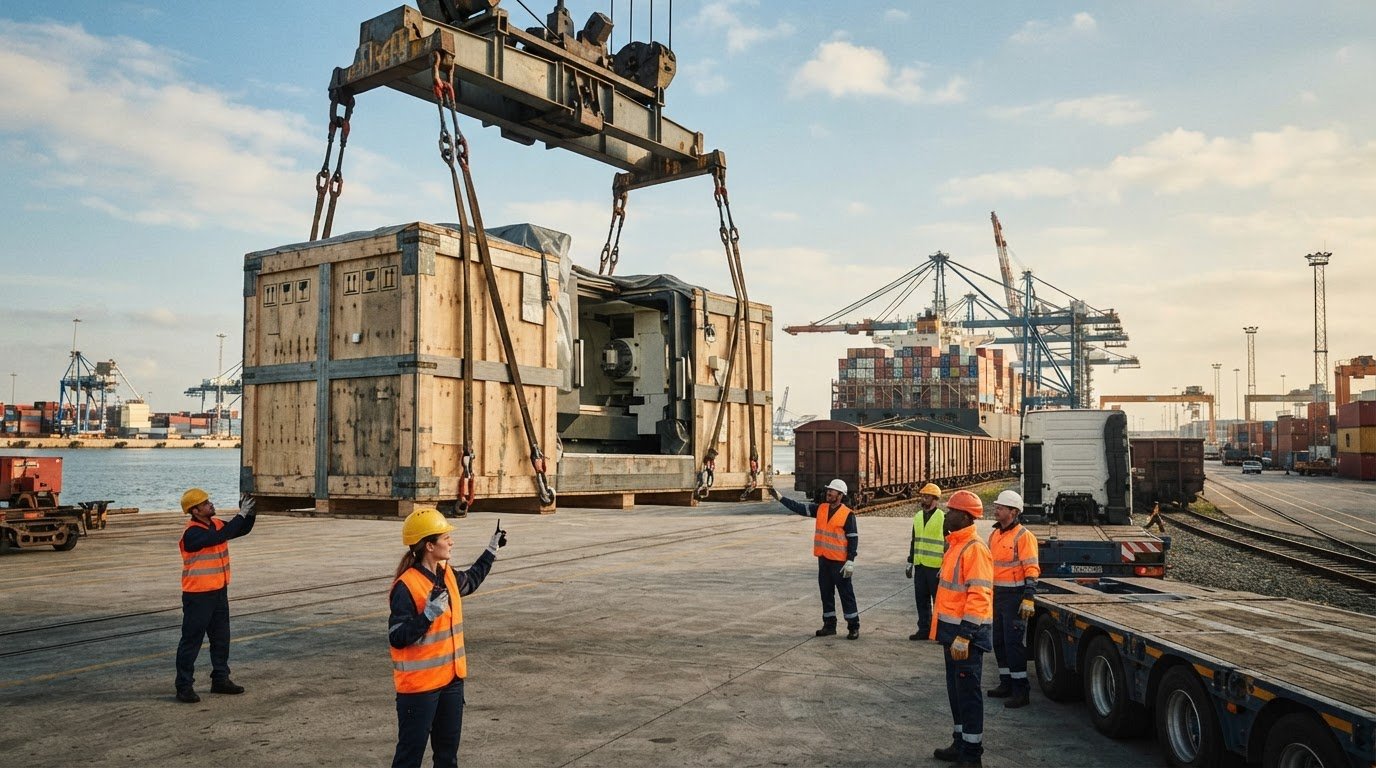
The lowest quoted rate may be the wrong starting point for capital equipment shipping. A machine’s dimensions, weight, lifting points, and handling needs can determine whether a proposed route and transport mode will work. If equipment arrives damaged or misses an installation window, the impact can extend well beyond freight costs.
Complex equipment moves leave little room for guesswork. Comparing air, ocean, and ground options on price alone can overlook schedule risk, specialized handling, and coordination at each handoff. International shipments also require early attention to documentation and customs.
This 2026 buyer’s guide explains how to document shipment requirements before requesting proposals, compare transport modes against operational priorities, and evaluate a logistics partner’s planning, packaging, compliance, and coordination capabilities. It also considers how project experience can inform your evaluation. For example, ICAT Detroit coordinated 56,000 pounds of automotive tooling from China to Mexico on a strict 14-day deadline. That was a specific past project, not a promise for every move.
Key Takeaways
- Build a shipment profile before requesting proposals so providers can assess the equipment and plan around delivery requirements.
- Review the route, schedule, handling, and documentation step by step to identify constraints before they disrupt the move.
- Compare air, ocean, ground, and oversized freight handling by cargo fit and operational priorities, not price alone.
- Evaluate capital equipment shipping partners for relevant project experience, network access, compliance support, communication, and contingency planning.
- See how ICAT Detroit coordinates transport and shipment requirements through project logistics, including a documented automotive tooling move.
Capital Equipment Shipping Starts With a Clear Shipment Profile
Capital equipment shipping coordinates the movement of substantial assets used in production or other operations, such as industrial machinery and automotive tooling. These moves require more than a routine freight booking. Cargo dimensions, weight, handling needs, route, and required arrival date all affect which transport plan is practical. The industry term Project cargo describes shipments that may involve large, heavy, or high-value equipment.
Start with accurate shipment data. A carrier or logistics provider can’t reliably assess equipment fit, handling, or timing if key details are missing or estimated. The origin and destination matter too. Site access, international transit, and the date the equipment must be ready for installation all shape the plan.
What information should you collect before shipping equipment?
Prepare a shipment profile before requesting a proposal. Include the details below and flag anything you still need to verify.
- Equipment dimensions and weight: Record length, width, height, total weight, and lifting-point locations. Note whether the equipment must be disassembled and who will handle that work.
- Condition and protection: Document equipment value, fragility, environmental sensitivities, current packaging, and any crating requirements.
- Pickup and delivery: Describe site access, loading and unloading conditions, receiving access, and any restrictions on where the equipment can be positioned.
- Operational timing: Confirm the required arrival window, installation sequence, site readiness, and any production schedule tied to delivery.
- Shipment route: Identify the origin and destination, and whether the move crosses an international border. Flag known documentation or customs coordination needs.
Specific information helps providers assess whether the equipment can move as presented or needs additional planning. If dimensions or weight are uncertain, verify them before comparing proposals.
Why do capital equipment moves need coordinated logistics planning?
Logistics planning organizes transportation, documentation, and timing to support successful shipment delivery. For capital equipment, those elements connect directly to site readiness and installation. A delivery that misses the receiving window may require schedule changes, even if transport itself went as planned.
Map the handoffs from origin to final position. The shipper prepares the cargo, transport providers move it along the route, customs support addresses cross-border documentation where needed, and the receiving location confirms access and readiness. Clear responsibilities help keep those steps aligned. ICAT Detroit coordinates complex moves through project logistics services, including transport, documentation, and specialized handling coordination.
Match Capital Equipment Requirements to a Shipping Plan
Once you have a shipment profile, use it to guide a sequence of decisions. Capital equipment shipping depends on the relationship between cargo specifications, route, timing, handling, and documentation. A site survey can reveal constraints that measurements alone may not show, including restricted access, loading areas, unloading capacity, and where the equipment must be positioned on arrival.
- Define the cargo. Confirm dimensions, weight, configuration, lifting points, and any disassembly needs.
- Confirm the route. Review origin and destination access, transit points, and whether the shipment crosses a border.
- Set the schedule. Work back from the required arrival window, installation sequence, and site readiness.
- Assess handling. Determine whether loading equipment, rigging, securing, packaging, or crating needs review.
- Validate documentation. Identify shipment records and any customs or trade compliance needs for the route.
How do dimensions, weight, and handling needs affect transport planning?
Cargo measurements help assess vehicle or container fit, loading methods, and route suitability. Consider weight and dimensions together with lift points, center of gravity, and securing requirements. Have qualified specialists assess handling details before the move is booked. Depending on the equipment, packaging, crating, rigging, or specialized transport may also need evaluation.
ICAT Detroit has engineered delivery of a 42-ton package measuring 30 feet long, 8.5 feet wide, and 10 feet high. That was a specific project, not a standard specification or outcome for every shipment. It illustrates why cargo measurements and handling requirements should inform the plan from the start.
What should a route and delivery-readiness review cover?
Check both ends of the move. Confirm site access, loading equipment, receiving capacity, unloading arrangements, and the order in which equipment must be delivered or positioned. Some shipments may require a route survey, permit acquisition, or additional site coordination. Requirements depend on the cargo and route, so verify the applicable details with the relevant parties rather than assuming a standard process applies.
For cross-border shipments, coordinate transport documentation with the shipment’s commercial terms. The U.S. International Trade Administration provides an overview of international trade finance that can help you consider payment methods and financial risk alongside freight planning. ICAT Detroit coordinates complex moves through its global network. Learn more about its project logistics planning and execution.
When route, handling, or delivery requirements remain unclear, discuss your equipment shipment requirements with a logistics professional before finalizing the plan.
Compare Air, Ocean, Ground, and Oversized Freight for Capital Equipment
No single mode fits every equipment move. For capital equipment shipping, compare the shipment’s dimensions and weight with the route, required arrival window, handling plan, and delivery-site access. Oversized freight handling is a specialized approach that may apply across a transport plan, rather than a separate mode like air or ocean.
| Option | Schedule needs | Cargo fit and route | Handling and coordination |
|---|---|---|---|
| Air freight | Evaluate when the required schedule makes air a practical candidate. | Confirm dimensions, weight, route availability, and airport access. | Coordinate cargo acceptance, handling, and onward delivery to the destination. |
| Ocean freight | Assess against the shipment’s planned transit window. | Consider for international routes when the cargo and available equipment fit. | Plan port handoffs, packaging, documentation, and final delivery. |
| Ground transport | Assess against the delivery date and route plan. | Review road access, cargo dimensions, weight, and loading requirements. | Coordinate pickup, securing, route details, and receiving-site access. |
| Oversized freight handling | Allow time to assess route and handling needs. | Consider when cargo exceeds standard transport dimensions or needs specialized handling. | Assess packaging, loading, route surveys, permits, and site coordination as applicable. |
When might air freight fit a capital equipment move?
Air freight may be worth evaluating when schedule requirements are tight, but timing alone doesn’t determine suitability. Compare equipment dimensions and weight with route availability, handling needs, and destination access, including how the shipment will reach its final site after arrival. Review air freight shipping options as part of that assessment.
When should you evaluate ocean, ground, or oversized freight?
For longer international routes, assess ocean freight against the required delivery timing, cargo fit, and port-to-site coordination. If the equipment exceeds standard container dimensions, Flat Rack Shipping may need consideration. Ground transport depends on route and site access, while oversized moves may call for additional route or permit review. Requirements vary by shipment, so verify the details before selecting a plan.
For out-of-gauge international cargo, compare the equipment and route against project cargo ocean freight planning. If dimensions or handling needs require specialized coordination, review oversized freight handling services.
Evaluate Risk, Cost Drivers, and Provider Capability Before You Commit
A capable provider should make a complex move easier to manage, not add uncertainty. Clear ownership of carrier coordination, shipment documentation, milestones, and issue escalation helps close gaps between handoffs. Compare proposals by scope and controls, not just by the quoted transport plan. Cost drivers include mode, cargo dimensions, route, handling, packaging, and documentation. Ask what each proposal includes and what could change if shipment details or site conditions differ from the assumptions.
Which questions should you ask a capital equipment logistics provider?
Ask who will coordinate each step and who will contact you if a milestone changes. Then assess whether the provider’s experience and network fit your cargo and route.
- What comparable equipment, industries, routes, and handling requirements have you coordinated?
- Who manages carrier coordination, shipment documents, milestone tracking, and exception escalation?
- How will you receive status updates, and who confirms delivery arrangements with the receiving site?
- What contingency steps are considered if the schedule, route, or site readiness changes?
Specialist coordination adds a defined point of responsibility across providers and handoffs. That makes it clearer who is tracking progress and resolving open issues.
How can you assess schedule, compliance, and cargo-protection controls?
Review shipment-specific documentation and trade compliance responsibilities before dispatch, especially for international moves. Confirm who prepares, checks, and shares required records. Ask how packaging, securing, and Chain-of-Custody Compliance needs will be addressed for your equipment. Give packaging particular attention, and use specialized packaging and crating guidance to frame questions about protection and handling.
ICAT Logistics Detroit once saved an automotive client more than $1 million in taxes on an oversized shipment to China. This was a specific past result, not a forecast or standard outcome. Ask any provider how its compliance review applies to your shipment and route.
What belongs in a useful capital equipment shipping proposal?
Request a written scope that identifies the proposed mode, route assumptions, handling plan, and milestone schedule. It should also state exclusions, documentation responsibilities, and escalation contacts. This level of detail helps you compare providers on the same operational basis and identify gaps before you commit.
Before accepting a proposal, confirm that its schedule aligns with your receiving and installation plans. To discuss your shipment requirements with ICAT Detroit, contact the logistics team.
Plan Your Capital Equipment Shipment With ICAT Detroit
A complex move needs a plan built around the equipment, route, schedule, and compliance requirements, not a standard booking template. ICAT Detroit coordinates air, ocean, and ground transportation, oversized freight handling, project logistics, customs coordination, shipment documentation, and packaging and crating. Through ICAT Logistics’ global network, the team coordinates the moving parts while keeping shipment requirements and delivery priorities in view.
What does ICAT Detroit coordinate for complex equipment moves?
ICAT Detroit brings transport planning and shipment coordination together for automotive, defense, and industrial equipment moves. The work may involve evaluating transport options, coordinating specialized handling, and addressing customs and documentation needs for international routes. ICAT coordinated 56,000 pounds of automotive tooling from China to Mexico on a strict 14-day deadline. That was a specific project, not a standard delivery commitment. If warehousing supports your plan, ICAT has a 56,000-square-foot warehouse near Detroit Metropolitan Airport.
What information should you include when contacting ICAT?
Share a clear shipment profile so the team can understand what needs to move and what delivery requires. Include the equipment description, exact dimensions and weight, value, origin, destination, and required delivery date. Add details that may affect planning:
- Pickup and delivery site access, loading and unloading conditions, and receiving capacity.
- Packaging status, fragility, environmental sensitivities, lifting points, and handling needs.
- Installation sequence, site readiness, and any timing constraints tied to production.
- Known documentation or customs questions for international transport.
Specific information supports a more informed discussion of mode, route, handling, schedule, and compliance responsibilities. If some details are not yet confirmed, identify what is known and what still needs assessment. This helps the logistics team distinguish firm requirements from open questions before finalizing the plan.
ICAT Detroit’s experience coordinating complex freight moves and access to a global partner network can support a plan tailored to your shipment. Share your equipment details and delivery priorities to discuss your capital equipment shipping requirements.
Discuss your capital equipment shipment
Set Your Equipment Move Up for a Controlled Delivery
Strong capital equipment shipping starts with verified cargo details, then aligns the mode, route, handling plan, documentation, and delivery window. Compare providers on relevant experience, clear ownership of handoffs, and how they address schedule and compliance requirements, not on the transport quote alone.
ICAT Detroit’s past projects show the range of moves its team has coordinated: 56,000 pounds of automotive tooling from China to Mexico on a strict 14-day deadline, delivery of a 42-ton package measuring 30 feet long, 8.5 feet wide, and 10 feet high, and an oversized shipment to China that saved an automotive client more than $1 million in taxes. Each was a specific project, not a promised result for every shipment.
Before planning a move, gather your equipment description, dimensions, weight, route, required arrival date, site access details, and documentation questions. Discuss your capital equipment shipment with ICAT Detroit to start a focused conversation about transport coordination and shipment needs.
Frequently Asked Questions
What is capital equipment shipping?
Capital equipment shipping is the coordinated transport of substantial assets used for production or other business operations, such as industrial machinery or automotive tooling. Planning accounts for cargo dimensions, weight, value, handling needs, route, documentation, and delivery timing. Unlike a routine freight booking, an equipment move may require coordination among transport providers, the shipper, customs support, and the receiving site to align delivery with installation and site readiness.
How do you choose the right shipping mode for capital equipment?
Choose a mode by matching the equipment profile and route to the required delivery window. Compare air, ocean, and ground options for cargo dimensions, weight, route availability, handling, and destination access. If the equipment exceeds standard transport dimensions, assess oversized freight handling and any route or permit requirements that may apply. No single mode is right for every move. Confirm the assumptions and coordination needs behind each proposal before deciding.
How much does capital equipment shipping cost?
There isn’t one standard price for capital equipment shipping. A proposal depends on factors such as transport mode, equipment dimensions and weight, route, handling needs, packaging or crating, and shipment documentation. International moves may also involve customs coordination. To compare proposals fairly, give each provider the same cargo and delivery details, then review the scope, assumptions, and exclusions alongside the quoted price. Request clarification if any charge or responsibility is unclear.
What information is needed to get a capital equipment shipping quote?
Prepare the equipment description, exact dimensions, weight, value, origin, destination, and required delivery date. Include lifting points, disassembly needs, fragility or environmental sensitivities, packaging status, and any known handling requirements. Describe access at both sites, loading and unloading arrangements, receiving capacity, and installation timing. For international moves, share documentation or customs questions. If a detail is unconfirmed, identify it as an open item so the provider can assess what needs verification.
Can capital equipment be shipped by air freight?
Yes. Air freight can be considered when the delivery schedule makes it a practical option, but cargo dimensions, weight, route availability, handling, and destination coordination all need review. The shipment must also connect from the airport to its final delivery point. Compare the proposed air plan with ocean and ground alternatives against your operational priorities. ICAT Detroit coordinates air freight as part of its freight and project logistics services, subject to shipment requirements.
What happens if equipment dimensions or delivery access change after planning?
Notify your logistics provider promptly and share the revised measurements or access details before the shipment proceeds under the existing plan. Changed dimensions or site conditions may affect cargo fit, loading and unloading arrangements, route suitability, handling, or the delivery schedule. Ask the provider to review the affected assumptions and confirm any required plan changes. Don’t rely on the original proposal until responsibilities, timing, and revised requirements have been clarified.
How can a logistics provider help protect capital equipment during international shipping?
A logistics provider can coordinate shipment-specific packaging and crating, handling instructions, transport handoffs, and customs and trade documentation. Ask how the provider will address cargo securing, status communication, and Chain-of-Custody Compliance, with clear responsibilities at each stage. Confirm who prepares or reviews required documents and who coordinates with the receiving site. These controls support equipment protection and compliance, but the plan should be tailored to the cargo and route rather than assumed to fit every shipment.