
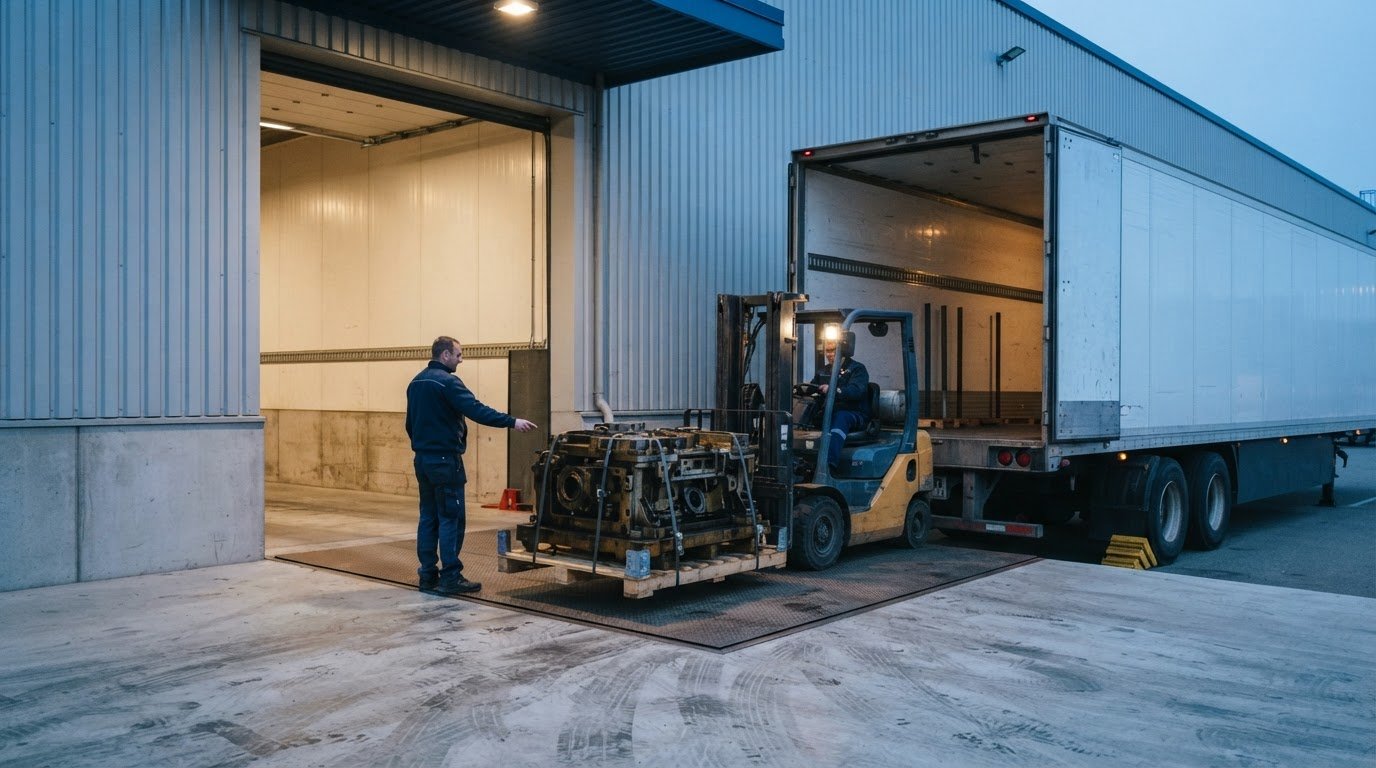
Fast transit is only useful when the shipment clears customs on time. Expedited freight to Canada may move the same day or overnight between nearby locations, depending on distance, route and border clearance. It costs more than standard freight, and CARM compliance matters: effective October 21, 2024, the party responsible for paying duties and taxes must use the CARM portal to submit payment.
You need a realistic delivery window and cost estimate based on the shipment, not just the distance. The transport mode, freight dimensions and weight, customs responsibilities, documentation, and timing all shape the plan.
This guide explains how to estimate shipping costs and timelines, coordinate the importer of record and customs broker, and prepare cross-border documents. It also outlines what to look for in a freight provider, so you can assess whether its speed, compliance coordination, and operational experience suit your shipment.
Key Takeaways
- Compare expedited and standard transport against the shipment’s deadline, cargo requirements, and total landed cost.
- Set clear responsibilities for the importer of record, customs broker, and party paying duties and taxes through CARM.
- Prepare accurate shipment details and supporting documents early to reduce customs delays and clearance issues.
- Build a delivery estimate around the origin, destination, transport mode, route, and border clearance process.
- Choose a freight provider that can coordinate transport, customs documentation, and the shipment’s specific handling requirements.
How Much Is Shipping to Canada?
Shipping cost depends on distance, transport mode, shipment dimensions and weight, handling, and border requirements. Expedited freight to Canada costs more than standard freight, so reserve it for urgent replenishment, production-critical parts, or cargo with a fixed delivery deadline. Hazardous materials and regulated goods require additional documentation and applicable handling. Shipment size alone does not determine expedited eligibility: parcel, palletized, partial-load, and full-truckload freight can all move on expedited plans when the carrier and mode suit the cargo.
- Match urgency to the transport plan. Choose expedited service when standard transit would miss a production or delivery deadline. Dedicated ground transport can provide direct movement, while air freight is the fastest option from the United States to Canada. For nearby locations, expedited freight may travel the same day or overnight, depending on distance, route, and border clearance. Include the cost of delay in your decision, not only the freight charge.
- Compare ground shipment types. Less-than-truckload (LTL) combines freight from multiple shippers, while full truckload (FTL) assigns a trailer to one shipment. Cross-border LTL typically adds 1-2 business days compared with equivalent domestic lanes for customs processing. Refrigerated (reefer) equipment supports temperature-controlled cargo; confirm the required conditions and handling before dispatch. For time-sensitive freight, consider whether shared capacity or direct movement better fits your deadline.
- Assess intermodal, air, and sea options. Intermodal combines rail and truck movement and typically adds 1-3 days compared with over-the-road trucking. Sea freight is the most economical option for large volumes, but it is generally less suited to urgent delivery. Air freight can reduce transit time, while airport handling and customs clearance remain part of the schedule. Compare the full route, including transfer points, rather than considering the main transport leg alone.
- Include border and handling requirements. Prepare a commercial invoice, bill of lading, packing list, and permits required for the goods. The importer of record must arrange the customs entry, with customs broker coordination for clearance. Identify the commodity accurately and disclose hazardous or controlled characteristics before booking. Hazardous shipments require Safety Data Sheets and compliance with Canada’s Transportation of Dangerous Goods Act. Food, agricultural goods, and alcohol can involve additional requirements.
- Account for the transport network. Road links support direct cross-border freight, while air connects U.S. and Canadian airports. Rail and intermodal routes can suit longer ground movements; sea routes can serve large-volume cargo. Road, rail, and air movements have distinct handling and compliance needs. For example, air shipments must meet Canadian Air Transport Security Authority requirements, and rail carriers and exporters must follow Transport Canada regulations.
- Build a quote around shipment details. Provide origin and destination, ready date, delivery deadline, dimensions, weight, freight type, and handling needs. State whether the load needs temperature control, special equipment, or expedited movement. The price depends on the case and is given after a quote request; distance, mode, capacity, cargo characteristics, handling, and customs requirements shape the estimate. Compare that estimate with the delivery window and the operational impact of delays.
Importer of record and customs broker coordination
For commercial freight from the United States to Canada, prepare a commercial invoice, bill of lading, packing list, and any permits required for the goods. Coordinate the importer of record, customs broker, and payment responsibilities before dispatch to keep documentation and clearance aligned.
-
Coordinate the Importer and Customs Broker
Identify the Canadian importer of record and customs broker before the carrier receives the shipment. The importer of record is responsible for the customs entry; the broker coordinates clearance using the shipment information. Exporters shipping goods to Canada must work with a qualified importer that has a business number from the Canada Revenue Agency.
For commercial entries under $2,500 CAD, importers can technically self-clear through the Canada Border Services Agency without a broker. The customs process still requires an importer of record. Confirm who will file the entry, communicate with the carrier, and resolve document questions. Avoid assigning payment, filing, and broker coordination to different parties without clear handoffs.
-
Prepare Customs and Export Documents
Gather the Canada Customs Invoice or commercial invoice, bill of lading, packing list, and any permits required for the goods. Keep the shipper, consignee, description, quantity, value, and weight consistent across all documents. The carrier and broker need shipment details that match the physical freight. A mismatch can interrupt customs clearance and delay release.
Coordinate PARS clearance information with the carrier and customs broker as part of the shipment handoff. Provide the shipment reference and supporting documents early enough for processing before arrival at the border. Exporters must classify goods to determine applicable tariffs and establish whether an export declaration or permit is required. When required, submit the declaration through CERS or G7-EDI. Keep shipment records for at least six years.
-
Account for Canadian Duties and Taxes
Determine the product classification and whether the goods qualify for CUSMA duty-free treatment. Canadian duties on goods that do not qualify can range from 0% to 25% or more, depending on the commodity. Canadian GST is 5% and applies even when goods qualify for CUSMA duty-free treatment. Build taxes and duties into the landed-cost estimate separately from freight charges.
Agree in advance which party is responsible for paying duties and taxes. Effective October 21, 2024, the Canada Border Services Agency requires that party to use the CARM portal to submit payment. As of May 20, 2025, all commercial importers shipping to Canada must post financial security to remain compliant. Align the importer, broker, and payment party before dispatch. For support with cross-border documentation coordination, discuss your shipment requirements.
Cross-border customs compliance and documentation
At the U.S.-Canada border, examinations, congestion, and document errors can delay expedited freight. Prepare customs data and the pre-arrival handoff before dispatch, then allow time for border processing in the transit plan.
-
Prepare Cross-Border Shipment Documentation
Before release, compare the commercial invoice, bill of lading, packing list, permits, and export data. Check that the goods description, quantity, declared value, origin, and weight agree across each record. A mismatch can prompt corrections or review and hold up border freight, even when the carrier is moving directly to its destination.
Submit required shipment information to the Canada Border Services Agency in advance, and coordinate the PARS pre-arrival filing with the carrier and customs broker. Keep the shipment reference consistent in the documents and handoff messages. For exports, determine whether a declaration or permit applies; submit required declarations through CERS or G7-EDI.
-
Identify Causes of Border Delays
Review the load for information gaps, restricted goods, and inspection needs before pickup. Customs examinations, document corrections, and border congestion can extend transit. Add a 1-2 day buffer to cross-border freight estimates for these risks, rather than treating the planned arrival as a guaranteed clearance time.
Dangerous goods need particular attention. Safety Data Sheets and compliance with Canada’s Transportation of Dangerous Goods Act apply to hazardous freight. According to the Government of Canada, an inspector may detain dangerous goods removed from transport until satisfied that the activity will comply with the Act. Confirm that shipment descriptions and handling records accurately reflect the cargo.
- Build customs costs into the freight estimate. Separate transportation charges from customs brokerage, duties, taxes, and any examination-related handling. Brokerage charges are commonly assessed by entry, while the work can depend on commodity classification, document quality, and shipment complexity. Confirm who will arrange clearance and pay each charge; do not treat a freight quote as the full landed cost.
Compare service options using the same assumptions. Origin, destination, cargo dimensions and weight, handling needs, route, and transit deadline all affect the estimate. A direct road movement and an intermodal route have different transfer and border-processing points. Keep the customs timeline visible alongside transit time, so a faster linehaul does not obscure the time needed for clearance.
Expedited freight delivery timelines from the U.S. to Canada
Nearby cross-border lanes can be fastest: Detroit to Toronto full-truckload freight may take the same day or next day. Chicago to Montreal typically takes 3-4 days, while Los Angeles to Vancouver typically takes 5-6 days.
- Set a delivery deadline and work backward. Record when the freight is ready, the required arrival time, and the destination receiving schedule. Expedited shipments between the United States and Canada may move the same day or overnight for nearby locations, depending on distance, route, and border clearance. Express shipping can take as little as 1-3 days. Treat those windows as transit estimates, not as a substitute for planning customs clearance.
- Compare the route and mode. Use a direct ground movement for suitable nearby lanes, and consider air freight when transit speed is the priority. Detroit to Toronto is a short-haul example; Chicago to Montreal and Los Angeles to Vancouver require longer planning windows. Origin, destination, distance, border crossing, and mode all affect the delivery schedule. Transfers and customs processing also contribute to total transit time.
- Match freight service to the shipment. Commercial freight timelines depend on shipment characteristics and the transport arrangement, not parcel delivery promises. When planning palletized or larger cargo, confirm dimensions, weight, handling needs, and the receiving location’s capacity. A dedicated movement can reduce intermediate handling compared with a shared route, while air freight changes the main transport leg. Choose a plan that fits both the cargo and the deadline.
- Keep border documents aligned with dispatch. Give the carrier and customs broker consistent shipment details, including the commercial invoice, goods description, and consignee. Document corrections or border examinations may extend planned transit, even with expedited freight. Build customs clearance into the schedule: a departure time alone does not establish the delivery time at a Canadian destination.
- Track milestones through delivery confirmation. Set status points for pickup, border presentation, customs release, and arrival at the Canadian destination. These milestones help operations teams see where a shipment stands and respond to a missed handoff. Record delivery confirmation with the shipment file, then compare actual transit with the planned window. For time-critical freight, share milestone updates with the receiving team so unloading can be coordinated.
- Coordinate the receiving end before dispatch. Confirm the consignee, receiving hours, unloading arrangements, and contact details before the carrier departs. On a Detroit-to-Toronto delivery, a delay in border clearance or an unavailable receiving dock can disrupt the schedule after the linehaul. Keep the commercial invoice and shipment references consistent across dispatch, customs, and receiving records. Clear, consistent details support each handoff and help delivery run smoothly.
A nearby Detroit-to-Toronto lane is a fast example: full-truckload freight may arrive the same day or the next day. Other nearby U.S.-Canada locations may also have same-day or overnight expedited service, depending on distance, route, and border clearance.
Choosing a freight provider for Canada
To book expedited freight to Canada, define your deadline, cargo, origin, destination, and customs responsibilities, then request a route plan and quote. Choose a provider that can coordinate transport, documentation, broker handoffs, and shipment milestones, not just the linehaul.
- Test the provider’s route plan. Give the provider the origin, Canadian destination, ready date, and delivery deadline. Ask which transport mode and border route fit the shipment, and how clearance time affects the schedule. For example, a Detroit-to-Toronto move and a Los Angeles-to-Vancouver move require different transit plans. Look for a plan that explains handoffs and timing assumptions.
- Match the equipment to your freight. Share dimensions, weight, packaging, handling instructions, and any temperature needs. Ask how the proposed carrier and equipment accommodate those requirements. A palletized production component, refrigerated load, and oversized machine need different handling plans. Avoid approving a service based only on a generic transit estimate that omits cargo-specific constraints.
- Assign customs responsibilities before booking. Name the importer of record, customs broker, and party responsible for duties and taxes. Ask how shipment data will reach the broker and how the carrier will receive clearance instructions. CARM payment is the responsibility of the party paying duties and taxes. The provider should explain its coordination role without implying it replaces the importer or broker.
- Compare quote assumptions line by line. Check whether the quote reflects the same origin, destination, cargo details, mode, delivery deadline, and handling requirements. Separate transportation from brokerage, duties, taxes, and other shipment-related charges. Ask what service conditions could change the estimate, such as a revised delivery location or cargo dimensions. Compare the scope and assumptions, not only the quoted total.
- Define shipment visibility and escalation. Before dispatch, agree which milestones will be reported, who receives updates, and who handles exceptions. Useful milestones include pickup, border presentation, customs release, and delivery confirmation. Ask how the operations team communicates a document hold or missed connection. A named escalation contact and clear status definitions help your team respond to disruption.
- Check operational fit and confirm booking details. Confirm the provider can coordinate the required mode, shipment handling, customs documentation, and delivery plan. Send the final invoice, packing details, and consignee information through the agreed process. Reconcile booking references across your shipping team, broker, carrier, and Canadian receiver. To discuss a cross-border shipment, share your freight requirements and delivery priorities.
ICAT Detroit: Oversize Freight Handling
ICAT Detroit coordinates Oversize Freight Handling for cargo that needs specialized transport planning, including oversized industrial equipment and production-critical freight. In more than 26 years in business, its solutions-oriented professionals have worked through disruptions across global supply chains. Turn to the team when dimensions, handling needs, or a firm delivery deadline call for a planned route and coordinated movement.
For broader shipment requirements, Project Logistics brings transportation planning together across the shipment. Expedite Ground Shipping supports time-sensitive ground movements, while Air Freight Shipping is an option when speed is the priority. The right approach depends on the cargo, route, and delivery requirement.
Share the shipment’s origin, Canadian destination, dimensions, weight, handling needs, and target delivery date to establish the planning requirements. Contact ICAT Detroit to discuss your freight requirements.
Put Your Canada Freight Plan Into Motion
Turn your shipping requirements into a coordinated plan before the cargo is ready to move. For expedited freight to Canada, define the delivery priority, shipment details, and customs responsibilities together. This gives your transportation team and broker a shared operating picture, with fewer open questions at dispatch. Focus the plan on the shipment’s actual constraints, including handling needs, route, and destination requirements.
ICAT Detroit offers Oversize Freight Handling for cargo that requires specialized transport planning, Project Logistics for coordinated shipment needs, and Expedite Ground Shipping for time-sensitive ground movements. These capabilities can support a plan shaped around your cargo and operational priorities, bringing transportation together with the details needed to execute it.
Bring your shipment requirements into the planning conversation and establish the next steps with the team. Contact ICAT Detroit about Canada freight to discuss your shipment. A clear plan puts you in a stronger position to move forward with confidence.
Frequently Asked Questions
What is expedited freight shipping to Canada?
Expedited freight prioritizes a shipment’s delivery deadline through a faster transport plan, often using direct movement instead of shared freight schedules. It can move by ground or air, depending on the route, shipment characteristics, and urgency. For example, a production-critical component may need a dedicated ground move, while a distant destination may call for air freight. Customs coordination remains part of the cross-border plan.
How fast can expedited freight ship from the U.S. to Canada?
Transit depends on origin, destination, mode, route, and border clearance. As a comparison, full-truckload freight from Chicago to Toronto typically takes 1-2 days, while less-than-truckload freight on that lane typically takes 3-5 business days. Nearby expedited movements may be same-day or overnight. Set the deadline with the receiving site’s hours in mind, since arrival outside its operating window may not complete delivery.
How much does expedited freight to Canada cost?
The price depends on the shipment and is provided after a quote request. Key factors include origin and destination, distance, transport mode, dimensions, weight, equipment, handling, delivery deadline, and customs requirements. For example, a pallet needing temperature control has different equipment needs from a standard pallet. Compare quotes using identical shipment details and service assumptions, and account separately for duties, taxes, and brokerage.
Which carriers offer expedited freight service to Canada?
ICAT Detroit coordinates air, ocean, and ground transportation through a global carrier network. The carrier and mode depend on your route, cargo type, delivery deadline, and handling needs. When comparing service plans, focus on who coordinates the carrier handoff, customs information, and delivery milestones. A shipment with an unusual footprint, for example, needs a plan that addresses equipment and handling, not just transit time.
What duties, taxes, and brokerage fees apply to freight shipped to Canada?
Charges depend on the goods’ classification, origin, destination province, and eligibility for trade preferences. Provincial tax treatment can differ: Alberta applies 5% GST to imports, while Ontario applies 13% HST. Brokerage fees are separate from transportation and depend on the entry and clearance work. Ask the importer, broker, and payer to align on who handles each charge before dispatch.
How does expedited freight compare with standard freight and air freight to Canada?
Expedited ground freight prioritizes speed, often through more direct movement; standard freight can suit shipments with flexible delivery windows. Air freight is the fastest shipping option from the United States to Canada, but the full journey still includes pickup, airport handling, customs, and final delivery. Choose based on the deadline, cargo, route, and budget. A nearby urgent shipment may favor expedited ground, while a distant critical shipment may warrant air.