
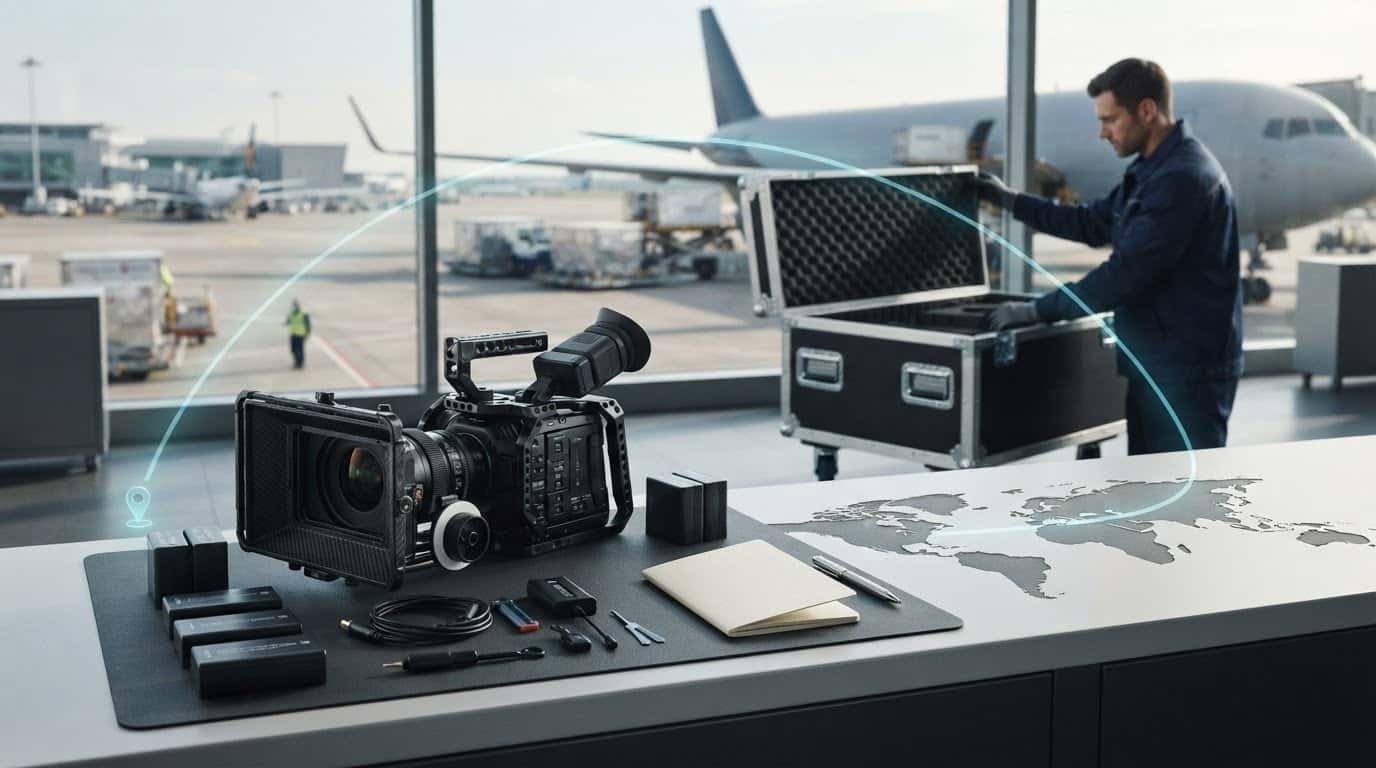
Temporary export is not a sale, and an ATA Carnet is designed for that distinction. A carnet for temporary export covers eligible goods such as professional equipment, commercial samples, and items for trade fairs or exhibitions. It can support duty- and tax-free temporary entry for up to one year, provided the goods are returned within the carnet’s validity.
A carnet for temporary export can simplify customs, but only when the goods, itinerary, and border endorsements meet its terms. Goods intended for sale or consumption don’t qualify, and an ATA Carnet does not replace an export license when one is required.
This guide explains what a carnet covers, how the goods’ value and destination affect costs, and how to handle licensing, sales, returns, and extensions. It also shows how the document fits into cross-border freight planning, so you can assess its role before time-sensitive cargo moves.
Key Takeaways
- Map every destination and transit country before arranging the carnet; participation affects the customs process available to you.
- Prepare a precise goods inventory and itinerary, then keep border endorsements aligned with each movement.
- Plan for the consequences of selling, donating, or otherwise disposing of covered goods abroad before shipment.
- Track the document’s expiry date and arrange any replacement process before it lapses.
- Compare the carnet process with temporary-entry paperwork and security requirements for your route and cargo.
Is an import or export license required in conjunction with a Carnet?
An ATA Carnet does not itself grant an import or export license. If your goods or transaction require a license, you must obtain it separately. The carnet covers temporary customs admission, not licensing permission. Before dispatch, assess the goods, destination country, and intended use to determine whether a carnet for temporary export fits the shipment.
Geographic coverage is broad, but descriptions use different country and territory counts. The ATA Carnet system is accepted by some 80 countries. Carnets are also accepted as entry documents in more than 100 countries and territories worldwide. Include every destination and transit country in the itinerary, then establish whether each accepts the carnet for your movement.
These figures describe participation in different ways: one refers to countries, while the other includes territories. They don’t mean customs procedures or licensing rules are identical everywhere. Customs authorities in each destination apply their own requirements. A carnet can simplify temporary-import formalities, but it cannot override import controls or permit requirements.
For international shipments, map the complete route before applying. List every country where the goods will enter and every country crossed in transit. Transit matters: blue sheets in an ATA Carnet package are used when passing through countries. At each border, customs must endorse the carnet correctly. Foreign customs stamps the counterfoil, which serves as the holder’s receipt.
If a destination country hasn’t joined the ATA Convention, a carnet cannot be used there. Instead, declare the goods for temporary import to that country’s customs administration. The country may require a security deposit to secure potential customs charges while the goods remain abroad. Confirm the destination’s temporary-admission process and required paperwork before dispatch, as these depend on its customs system.
A carnet also doesn’t remove U.S. export reporting requirements in every case. It eliminates the need to file an Electronic Export Information form except for exports that require an export license. When licensing applies, prepare the license and required export filing alongside the carnet documentation.
- Separate carnet eligibility from license requirements for the goods and destination.
- Record destination and transit countries in the itinerary.
- For a non-participating country, arrange its temporary import declaration and any required security deposit.
Can I Sell the Goods Covered Under ATA Carnet?
No. An ATA Carnet covers temporary movement, not goods intended for sale or sale on approval. Goods sold abroad must go through the regular customs process, with applicable duties and taxes addressed in that country.
For a U.S. application, provide detailed descriptions that allow customs authorities to identify each item, along with every destination and transit country. Carnet security is required and is based on the goods’ value, type, and destination.
In the United States, apply through the United States Council for International Business (USCIB) or an authorized service provider. USCIB and its authorized service providers issue ATA Carnets.
The carnet serves as a single customs document for handling customs matters across multiple administrations. Its guarantee supports temporary admission, while the listed goods and itinerary define its coverage. A customs broker can coordinate the carnet with shipment documents and customs declarations, but the carnet does not make a sale eligible for temporary admission.
At each relevant border, present the carnet and goods for customs processing. ATA Carnet holders must present them to U.S. Customs and Border Protection when exporting from the United States, importing and re-exporting abroad, and re-importing into the United States. Foreign customs keeps vouchers as receipts for entry and re-export. The holder should retain the document and ensure each required operation is recorded.
A customs broker can align the goods inventory, commercial shipment records, and carnet details before departure. For example, if a listed machine travels to an overseas exhibition, its description should match the machine presented for inspection. If the shipment includes several identifiable items, describe each clearly enough for customs officials to distinguish them. An invoice or transport record does not replace the carnet.
If goods covered by a carnet are sold, donated, or otherwise disposed of abroad, customs may assess duties and taxes. Sold goods are also subject to a penalty equal to 10% of those duties and taxes, in addition to payment of the duties and taxes. The national guaranteeing association guarantees customs duties and taxes plus that 10% penalty. The International Chamber of Commerce states that failure to complete required carnet operations may result in charges equal to 110% of duty and import tax.
Keep the carnet, inventory, and transport documents aligned through export, foreign entry, re-export, and return. For shipment documentation and customs coordination, discuss your documentation requirements with a logistics team before the cargo moves.
Validity periods, returns, and extensions
An ATA Carnet is valid for up to one year, and its expiry date controls the temporary-admission period. Plan return movements and any replacement application around that deadline.
Carnet Validity Periods
An ATA Carnet allows qualifying goods to enter participating countries without duties or taxes, provided they return within one year. Its validity period is the permitted window for temporary movements, not an open-ended period that resets with each trip.
Check the carnet’s expiry date against the full itinerary, including the final return. Goods that remain abroad when the document expires may face customs consequences in that country. The United States treats an expired U.S.-issued carnet differently from foreign customs authorities.
For example, if equipment is scheduled for several overseas events, include the return leg in the original schedule. The expiry date remains the controlling limit, even if the final event or onward transport changes.
Repeated Use and Multiple Trips
During its one-year validity, an ATA Carnet may cover multiple exits from and entries into the United States and participating foreign countries. The holder can make repeat visits to countries listed in the itinerary while the document remains valid.
Each movement still requires the appropriate customs presentation and endorsement. Before another trip, match the goods to the carnet inventory and confirm that the destination appears in its itinerary. A new trip does not reset the validity period or extend the date printed on the document.
For a U.S. business taking the same listed equipment to successive trade events, repeat use can avoid preparing a separate temporary-admission document for each qualifying trip. Keep the carnet available for every border operation and retain completed records through the final return.
Returns, Extensions, and Replacement Carnets
Return the goods within the carnet’s one-year validity and present the document at each required customs stage. An ATA Carnet allows qualifying goods to enter participating countries without duties or taxes only if the goods return within that period.
A replacement carnet may extend the original ATA Carnet’s 12-month limit, but apply before the original expires. Foreign customs approval is required, so a replacement doesn’t automatically guarantee continued temporary admission abroad.
Start the replacement process while the original remains valid, and allow for the destination’s approval process in your schedule. If the goods remain in a foreign country after expiry, that government may assess penalties if they are re-exported late. An expired U.S.-issued ATA Carnet does not result in penalties or duties assessed by the United States, though foreign customs may assess penalties if the carnet expired before the goods left that country.
Set a return deadline before expiry and track the carnet alongside shipment milestones. This gives the holder time to address a delayed return or seek a replacement before the security and temporary-entry period ends.
Costs and paperwork without a carnet
An ATA Carnet and a U.S. Temporary Importation under Bond (TIB) follow different customs routes. A carnet can support temporary admission across participating countries with one international customs document; a TIB is a U.S. customs entry backed by a customs bond under Chapter 98 tariff provisions. Neither is always cheaper or simpler. Compare the route, goods, security requirement, and entry paperwork before choosing.
In the United States, carnet processing fees depend on the value of the listed goods. Applicants pay a fixed fee and a premium based on goods value, while required security depends on the goods’ value, type, and destination. These are separate parts of the application’s cost structure. Determine the shipment value and itinerary first, as both affect the required security.
Without a carnet, temporary admission follows the destination’s customs process. For a U.S. TIB, goods must be entered under the relevant procedure and backed by a customs bond. Goods imported under a TIB cannot be imported for sale. For U.S. entry, the goods must be cleared using CBPF Form 3461 or Form 7501. The selected form is part of the entry paperwork, not a substitute for the bond.
A U.S. TIB can run for up to one year and may be extended to a maximum of three years from the date of importation. To extend it, file CBP Form 3173 with U.S. Customs and Border Protection before the current period ends. This deadline affects planning: the paperwork must be submitted before the existing authorization expires.
The format also affects document handling. Depending on the countries being visited, an ATA Carnet may be issued digitally or on paper. A digital carnet holder receives a PIN and must download the document in the ATA Carnet app. For a paper carnet, a customs official at the issuing office must stamp the green front cover. Match the required format to the itinerary before arranging travel.
In the UK, holders must keep paper ATA Carnets for 12 months after they expire. That retention period applies to UK holders and should be built into document-control procedures. Keep the carnet with its completed records so you can retrieve it if customs queries arise after the trip.
Compare the expected carnet fees and security with the TIB bond and entry requirements. Consider the goods’ intended use, route, customs procedure, required security, and how long the goods will remain temporarily admitted. A clear comparison helps you choose paperwork suited to the movement, without treating a customs document as permission to sell or permanently transfer goods.
When an ATA carnet can be used for temporary exports
An ATA Carnet suits temporary movements when goods are taken abroad for a defined purpose rather than transferred permanently. Assess the purpose of each item before preparing the shipment. Eligible categories include professional equipment, commercial samples, exhibition goods, and personal effects or goods for sports purposes.
Start by separating reusable goods from items expected to be consumed, discarded, or sold. A shipment may contain different item types, so assess each item rather than assuming the whole load qualifies. Consumable and disposable goods are excluded. Goods intended for sale or sale on approval require a regular customs entry, not carnet treatment.
Next, compare the planned activity with each item’s function. Professional equipment should support work abroad, exhibition goods should serve the event, and sports goods should support sporting use. This purpose-based review can reveal mismatches before dispatch, such as describing a product as a sample when the actual plan is to sell it.
Descriptions matter because customs officials need to identify goods presented for inspection. Build the inventory around distinct items and accurate descriptions, then align those details with the shipment. A broad label such as “equipment” may not adequately identify a specific item. Clear records help show that the goods presented match the temporary-use plan.
The route is another part of the eligibility decision. List destination and transit countries in the itinerary, and account for each point where customs processing occurs. If the itinerary changes, the document and movement plan may no longer align. Resolve route changes before the goods travel, especially when transit and destination customs procedures differ.
Finally, check that the return plan fits the intended use. Goods should return in the same state as when they left; don’t plan to leave or modify items abroad. For goods temporarily exported from the UK, processing or repair abroad is not allowed, except for routine maintenance that keeps them in their original condition. These limits help distinguish temporary use from a transaction requiring another customs procedure.
Use this screening before cargo is packed: classify each item, record its purpose, confirm the itinerary, and align the return plan. If those elements fit, a carnet may suit the movement. For cargo with complex dimensions or tight transport coordination, discuss temporary-export cargo planning before dispatch.
ICAT Detroit: Oversize Freight Handling
ICAT Detroit coordinates Oversize Freight Handling when temporary-export cargo exceeds standard transport dimensions and requires controlled movement. For a carnet shipment, the freight plan must align with the goods, route, border paperwork, and return schedule. Oversized cargo requires handling and transport considerations alongside customs compliance.
Project Logistics can coordinate complex moves, while dedicated ground transport or Air Freight Shipping can support time-sensitive transport plans. The right approach depends on the cargo’s dimensions, route, timing, and required mode. ICAT Detroit can coordinate these logistics decisions so the freight plan supports the shipment’s operational requirements.
Contact ICAT Detroit to discuss your oversize freight or project logistics requirements.
Set the Return Plan Before Freight Moves
Before temporary-export cargo leaves your facility, align the customs documentation with the shipment plan. Then confirm who controls the cargo at each handoff, how the route supports the required return, and whether the freight’s dimensions or delivery window require additional coordination. A carnet for temporary export is one part of the overall movement.
ICAT Detroit coordinates Oversize Freight Handling for cargo that exceeds standard transport dimensions, as well as Project Logistics for complex movements. When timing is critical, Expedite Ground Shipping can support the transport plan. Consider each requirement alongside the carnet itinerary and border documentation, so the movement is planned as one connected operation.
Bring your cargo dimensions, route, timing, and return requirements into the planning discussion. Contact ICAT Detroit about your carnet and the freight movement that supports it. A clear plan gives your team a practical starting point for the next shipment.
Frequently Asked Questions
What is an ATA Carnet?
An ATA Carnet is an international customs document used to process eligible goods temporarily moving across borders. For paper carnets, a customs official at the issuing office must stamp the green front cover. Each sheet includes a counterfoil that remains in the document and a removable voucher listing the covered goods, which serves as the required CBP document.
What happens if the goods are imported not re-exported?
If goods are imported into the United States under a foreign-issued carnet and remain after it expires, U.S. Customs and Border Protection assesses liquidated damages. The goods must leave the United States before that foreign-issued document expires. Keep departure records and customs endorsements together to show the export operation was completed within the carnet period.
Where may I obtain additional information on the ATA Carnet?
If a carnet is lost, contact the provider that issued the original document to obtain a duplicate. Keep the issuer and reference details accessible during travel so you can identify the right provider if the original is misplaced. In the United States, USCIB and its authorized service providers issue carnets and can clarify application-document procedures.
What is an ATA carnet for temporary export?
It is a customs document that supports the temporary movement of eligible goods from one country to another, then their return. Treat it as a record tied to specific listed items, not as a general shipping document for every item in a load. If goods travel as freight from the UK, they may also need to be included on form C21i in the Customs Declaration Service.
Which goods can be covered by an ATA carnet, and which are excluded?
Eligible categories include professional equipment, commercial samples, exhibition goods, and personal effects or goods for sports purposes. Consumable and disposable items, plus goods intended for sale, are excluded. For freight exported from the UK, check whether the goods also need to appear on form C21i in the Customs Declaration Service. That declaration is a separate paperwork consideration from deciding whether goods qualify for carnet coverage.
Which countries accept ATA carnets for temporary imports?
Acceptance depends on the destination and route, so use the carnet itinerary to identify relevant customs administrations. The UK, European Union, Norway, and Switzerland began the soft launch and transition to digital ATA Carnets on 1 June 2026. That digital transition identifies participating markets but isn’t a complete country list; transit requirements can also affect how the document is handled.
How much does an ATA carnet cost in the United States, including fees and security deposit?
The U.S. application’s total depends on the listed goods and destination, rather than one universal amount. Processing can take two business days if the application and security deposit arrive by 4:00 pm ET. Build in time to prepare the application and security, because an incomplete submission or late arrival misses that stated processing condition.
How long is an ATA carnet valid, and can it be extended?
An ATA Carnet is valid for up to one year. A replacement carnet can extend the original limit if you apply before expiry, subject to foreign customs approval. For digital documents, the holder receives a PIN and must download the carnet in the ATA Carnet app on their phone. Keep the document accessible during travel so customs can process the relevant movement.